center> Important News Iran stars: #FreeIran #MaryamRajavi #Mek Opposition
div style="margin: 15px 0px 0px; display: inline-block; text-align: center; width: 200px;">
Showing posts with label #FreeIran #MaryamRajavi #Mek Opposition. Show all posts

ANALYSIS: How to tackle Iran’s Middle East bellicosity

Thanks to years of Western appeasement in the face of Iran’s belligerence across the Middle East, evidence of Tehran’s dangerous footprints are now visible in several countries across the region, including even Saudi Arabia’s Eastern Province.
The Trump administration, however, has made it quite vivid its adoption of a firm approach. This stance, signaled in the historic May conference in Riyadh, is long overdue and should be enhanced by Washington supporting the Iranian people’s desire for regime change.

A history of devastation

Iran has a long record of hostility against neighboring countries and US interests in the Middle East. The 1983 bombings targeting the US Embassy and barracks in Beirut, the Khobar Towers attack in 1996, all climaxed in the support Iran provided for Shiite proxies and the Sunni Taliban in their campaign against US-led coalition forces in Afghanistan and Iraq.
In parallel form, the Lebanese Hezbollah and Hamas, two known terrorist groups, have for over 30 years enjoyed contributions from Tehran to fuel sectarianism throughout the Middle East and carry out terrorist attacks.
The Obama administration handed Iraq over to Iran in a silver plate through a strategic mistake of prematurely pulling out all US troops. This paved the path for Iran to further export its “revolution” through a convenient medium of extremist proxies.
The West can literally be accused of standing aside and watching Iran’s aggressive policy. This has rendered a slate of countries, including Afghanistan, Bahrain, Iraq, Saudi Arabia, Syria and Yemen feel threatened and/or left utterly devastated from Iran’s meddling on their soil.
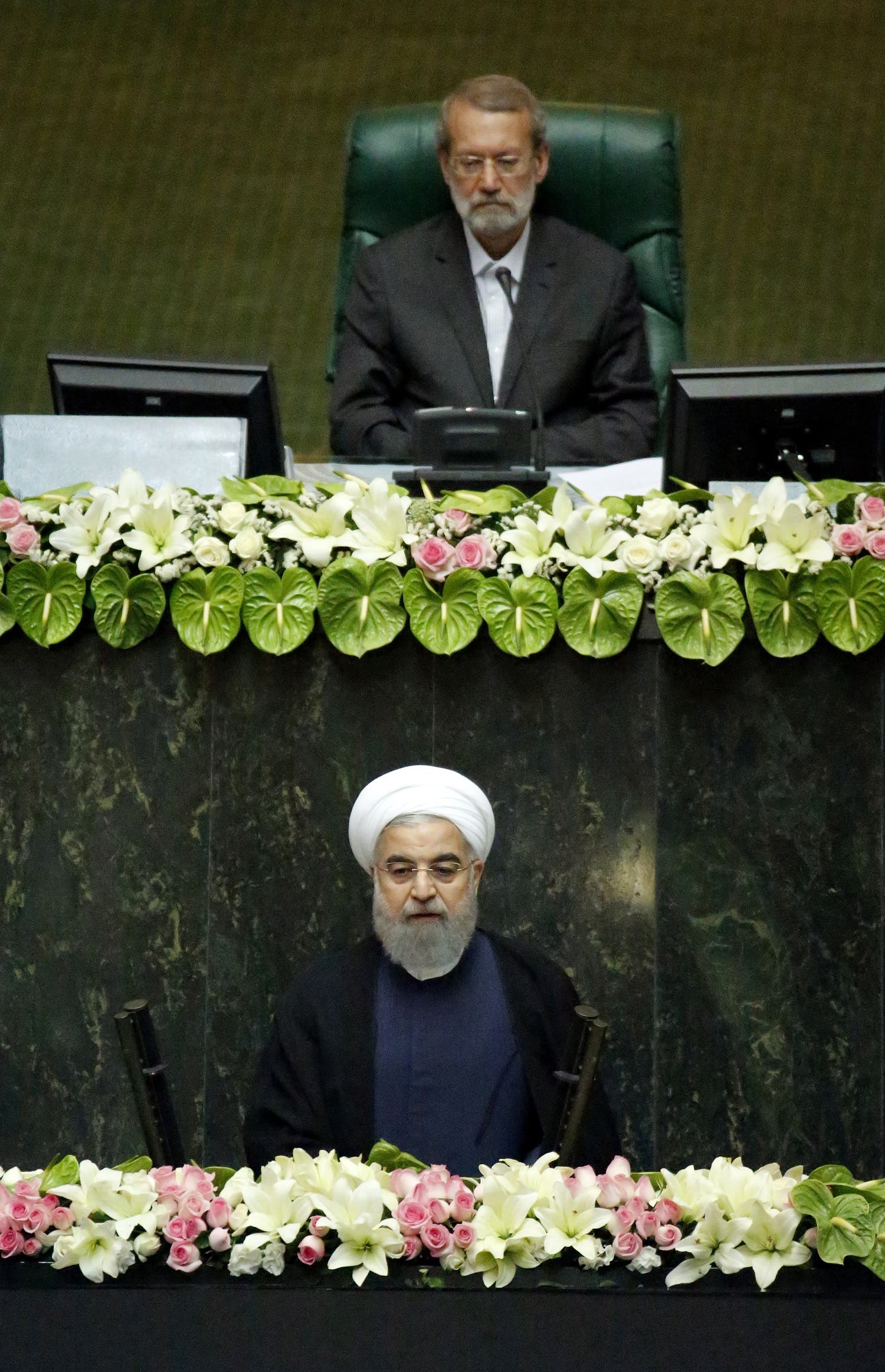
Iran’s Parliament Speaker Ali Larijani (top-R) attends President Hassan Rouhani’s swearing-in ceremony in Tehran, on August 5, 2017. (AFP)

Troubling activities

Of late, Iran has been reported to send further weapons and narcotics to Yemen’s Houthis. These drugs are sold to provide income for Iran’s supported militias on the ground in the flashpoint country south of Saudi Arabia, Tehran’s archenemy in the region.
Members of Iran’s Revolutionary Guards (IRGC) are present in Yemen also to instruct and guide the Houthis in assembling weapons smuggled into the country by Tehran.
“For the last six months the Islamic Revolutionary Guards Corps (IRGC) has begun using waters further up the Gulf between Kuwait and Iran as it looks for new ways to beat an embargo on arms shipments to fellow Shi'ites in the Houthi movement,” Reuters cited Western and Iranian sources.
“Using this new route, Iranian ships transfer equipment to smaller vessels at the top of the Gulf, where they face less scrutiny. The transshipments take place in Kuwaiti waters and in nearby international shipping lanes, the sources said.”
The Iranians are also taking provocative measures against the US Navy in the same region recently, viewed by analysts as actions to learn the limits of US President Donald Trump. On July 26th an armed Iranian patrol boat closed within less than 150 meters of the USS Thunderbolt, yielding back only in response to warning shots fired by a US Navy ship.
Such developments are reasons why Trump contacted his French counterpart Emmanuel Macron “to explore how to increase cooperation in addressing the ongoing crises in Syria and Iraq and countering Iranian malign influence,” according to a White House readout.

Positive steps forward

Despite the utterly wrong decision of EU foreign policy chief Federica Mogherini visiting Tehran for Iranian President Hassan Rouhani’s inauguration, the Trump administration is sending push-back signals and making Iran learn its aggressions will not go without cost.
This is a necessary and welcomed shift in Washington’s foreign policy.
President Trump has signed into law a strong bipartisan Congressional initiative imposing strict sanctions on Iran, Russia and North Korea. The IRGC is now considered a Specially Designated Global Terrorist group. Considering the Guards’ control over at least 40 percent of Iran’s entire economy, this raises the stakes for companies considering doing business with Tehran.
It would be wise to reconsider investing in Iran’s $400 billion economy and ponder placing one’s bets in other regional countries, or say, the United States’ $19 trillion establishment.
And in news that most certainly raised eyebrows in Tehran, Iraqi Shiite cleric Muqtada Sadr visited Saudi Arabia recently and called for the controversial Iran-backed Popular Mobilization Units in his country to be dissolved now that the Islamic State has been defeated.
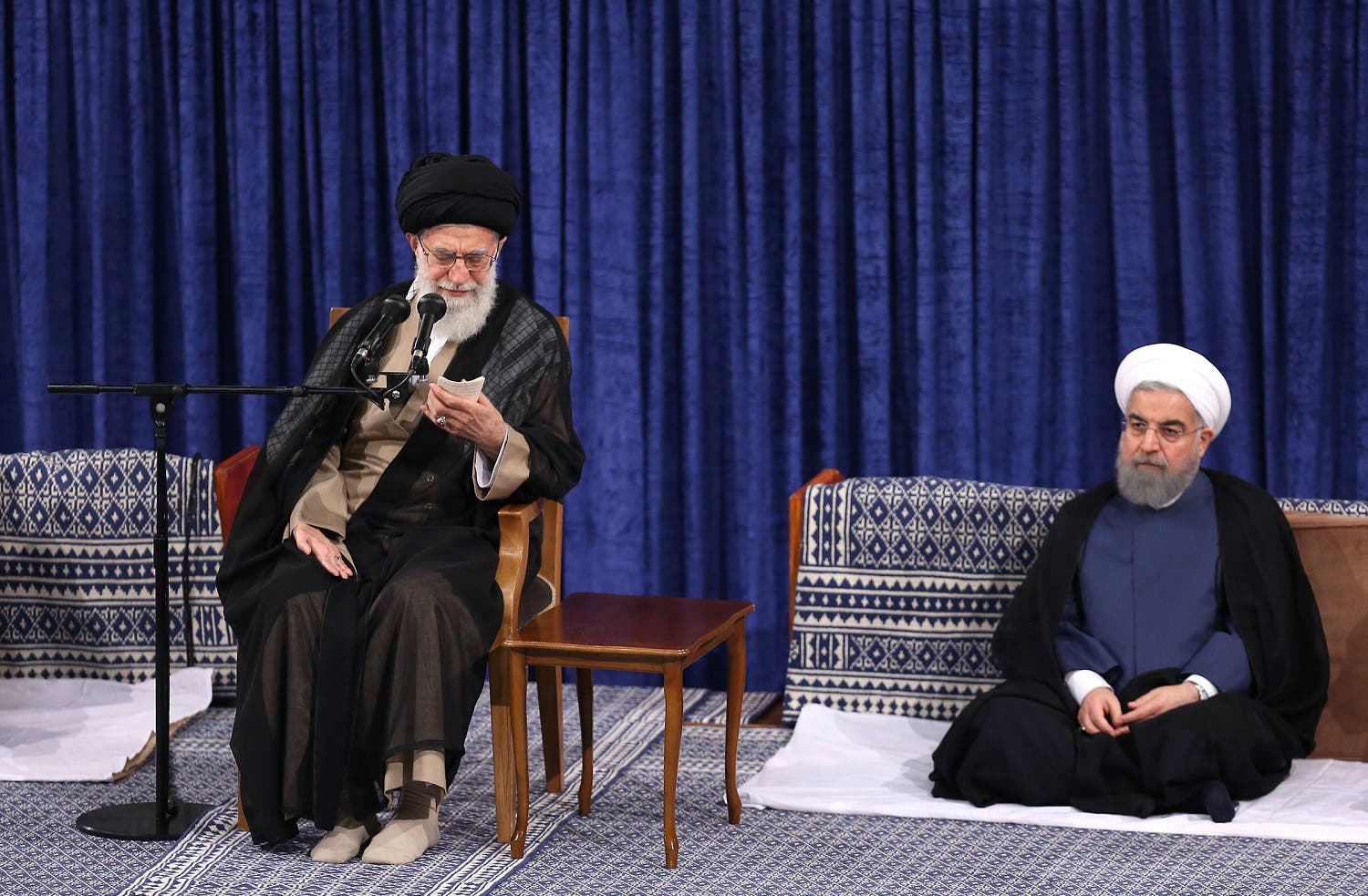
Supreme Leader Ayatollah Ali Khamenei, left, speaks in the official endorsement ceremony of President Hassan Rouhani, right, in Tehran, on Aug. 3, 2017. (AP)

The nuclear deal

High hopes were placed in the nuclear deal sealed between the P5+1 and Iran, which Obama hoped to leave behind as his foreign policy legacy.
Two years down this road it has become vivid that Iran’s behavior has not changed, to say the least. In fact, Tehran’s support for Hezbollah and other extremist entities have escalated. Iran’s role in the Middle East, namely Syria, Iraq and Yemen have been horrifically destructive.
The Trump administration can lead the international community in instituting the first real and effective initiative against the Iranian regime.
Any trade with Tehran should hinge on:
- the regime halting all executions and human rights violations,
- withdrawing their forces from Syria and Iraq, and severing any ties and support for terrorist groups,
- completely stopping missile activities, especially ballistic missile production and tests,
- ending all nuclear initiatives and providing true “anytime, anywhere” access to all suspected sites, including military facilities.
Moreover and parallel to recent sanctions, which must be executed immediately and without any loopholes, the Iranian people’s organized opposition, resembled in the National Council of Resistance of Iran, should be recognized. This will pave the path for regime change by this coalition without war or military intervention.
Failure in this regard is tantamount to aiding Tehran’s regime.
Last Update: Monday, 7 August 2017 KSA 08:23 - GMT 05:23

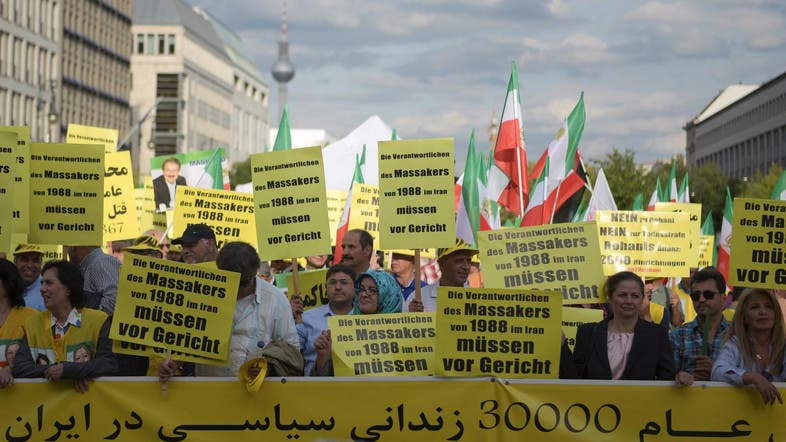
CALLS FOR JUSTICE AND ACCOUNTABILITY FOR THE 1988 MASSACRE LEAD TO CRACKDOWN ON MEK/PMO

Written by Jazeh Miller
As the movement for calling for justice in regards to the 1988 massacre of 30,000 political prisoners grows, the Iranian regime is fighting back in an attempt to discredit the movement. Recently, the state-run Basij News wrote, “The People’s Mojahedin of Iran (MEK/PMOI) has organized the maximum propaganda and military activities against the Islamic Republic of Iran. The unresolved issue is how some of the political circles support the MEK’s measures in the current situation and they question the events of the 80s, while trying to call the hangman a martyr.”
Various members of the leadership of the regime have also spoken out against France for hosting the National Council of Resistance of Iran (NCRI) annual event. “France hosts Iran’s enemies, whereas it established economic relations with Iran after the Joint Comprehensive Plan of Action (JCPOA),” said Foad Yazidi at a meeting entitled “The Islamic Human Rights’ Conference”.

He also noted, “We had a lot of sanctions before the Iran Nuclear Deal. However, the question is that who is left out sanctions after this deal? According to this law, even the President could be sanctioned. The U.S. has enlisted us as the enemy country. Consequently, it doesn’t make much of a difference to give or not to give concessions as long as we are on this list.”
The focus of the regime has been to discredit the movement by discrediting the MEK, which is seen as the backbone of the protests and domestic uprisings within Iran. Members of the regime argue that the state needs to confront the MEK, versus brushing them under the rug. Many argue that the regime’s unwillingness to talk about the massacre has given the MEK a foothold with the youth and others, because of the questions they are able to raise.
“We should have given people as much information about the MEK that there was no ambiguity about the executions in 1988,” said Mohammad Sadeq Koushki, an international affairs expert in Iran.
The regime seems unable to stop or derail the popular position of the MEK with the younger generation in Iran, despite all the efforts through the state-run media, lobbyists in the international community, and outright suppression of the group. Throughout these efforts, the MEK/PMOI have continued to focus on the rights of the Iranian people and advocate for human rights and the freedom to express a political opinion that is not in agreement with the regime.

Even within the regime, there is talk about how films about the MEK must reflect the views of the regime. If they are historically accurate, then the filmmaker must be a supporter of the MEK. One filmmaker was quoted as saying, “Many people, even at the government level, go along with these deceptive slogans.”
The MEK/PMOI has been a voice of political opposition, questioning the actions of the Iranian regime. Working with their network within the country, they have exposed the actions of the regime to the international community, making it clear that the regime can’t be trusted.

In addition to the MEK/PMOI, other voices in opposition to the regime have built a coalition, known as the NCRI. This group has become the democratic alternative to the fundamentalism of the regime. Their 10-Point Plan is the basis for building a free, non-nuclear, and democratic country in place of the fundamentalism and exporting of terrorism that is the regime’s bread and butter.

Senior U.S. Senate Delegation Meets with NCRI President-elect Rajavi

In a move that must frustrate the Iranian regime and its mullahs, the National Council of Resistance of Iran (NCRI) President-elect Maryam Rajavi hosted a senior Senate delegation from the United States on August 12, 2017. The meeting was held in the Albanian capital of Tirana. During the gathering, the two groups discussed the current situation of the People’s Mojahedin Organization of Iran (PMOI/MEK) in Albania, the latest developments in Iran and the Middle East, and solutions to end the current crisis sweeping that region.
The Senate delegation was comprised of Senators Roy Blunt, Vice President of the Republican Conference, and member of the Appropriation, Select Intelligence, Rules and Administration, and Commerce, Science, and Transportation Committees; John Cornyn, the Majority Whip, and a member of the Judiciary, Select Intelligence, and Finance committees; and Thom Tillis, a member of the Armed Services, Judiciary, Banking, Housing and Urban Affairs and Veterans’ Affairs committees.
The meeting was initiated by Senator Roy Blunt, who led the delegation in congratulating the MEK for the safe and secure relocation of all Camp Liberty residents out of Iraq. They also wished the group well in its efforts to secure democracy and human rights in Iran.
IMG_2124.JPG
Mrs. Rajavi, after thanking the senators for their decisive position on the Iranian regime, emphasized that contrary to the propaganda by the Iranian regime’s apologists, the ruling theocracy was rotten to the core and very fragile. Without foreign support, especially the policy of appeasement pursued in the U.S. and Europe, it would not have survived so long. She added that regime change in Iran is necessary and a viable and democratic alternative exists that could make a successful regime change possible. Mrs. Rajavi said equating regime change by the Iranian people for democracy with war and instability in the region is a sheer lie, the source of which is the Iranian regime’s lobby in western capitals. They demagogically turn the truth on its head, she noted, adding that the overthrow of the Tehran regime was a prerequisite to ending crisis and war in the Middle East.
As part of the meeting, some steps that the NCRI believes necessary for the international community to undertake regarding Iran were discussed. These included imposing comprehensive sanctions on the Iranian regime’s banking and oil sector, expelling the IRGC and its affiliated militias from the Middle East, and taking urgent steps to punish the regime for the 1988 massacre of 30,000 political prisoners.
The Senate delegation also met with MEK members that witnessed or were victims of the regime in Iran and within Iraq at Camps Liberty and Ashraf.

IN SOLIDARITY WITH IRAN’S YOUNG GENERATION ON INTERNATIONAL YOUTH DAY

August 12 marks International Youth Day to recognize and draw attention to the issue of “Youth Building Peace”. It celebrates young people’s contributions to conflict prevention and transformation as well as inclusion, social justice, and sustainable peace.In Iran, however, the atmosphere of growth and advancement for the younger generations have been eliminated by the Iranian regime’s suppression of their freedom of speech and the press,
closure of universities, sending young people to war, and plundering the public’s wealth. Thus Iranian youths have found no opportunity for contributing to global peace.
A population of 23 million people between 15 to 29 years of age has made Iran one of the world’s largest young nation.
This young nation, however, faces soaring unemployment as one of its main problems. Almost 15 million people have no jobs, at least 4.5 million of whom are university graduates. [1] In 1986, almost 70% of university graduates could find jobs shortly after leaving school. By 2011, that rate dropped to less than 50%. [2]
That is, more than 50% of Iran’s educated are unemployed while the rest are employed in menial jobs such as construction workers, street peddlers, repairmen, etc. which are not compatible with their professional training and studies.
Under such hopeless circumstances, the majority of Iran’s at least 14 million [3] drug users are young men and women. The average age of addiction in Iran has dropped to 20, according to reports published by state media. [4]
The number of people suffering from drug addiction has more than doubled since 2011, according to a survey by a drug control group. [5]
However, the figures published by the state should be considered as minimum with the actual figures being considerably higher. Disappointingly, the Iranian regime has no short or long-term plans to contain the unbridled spread of addiction especially among the young populace.
Experts argue that easy access to cheap narcotic drugs has contributed to the horrific number of drug addicts in Iran. It is common knowledge that narcotics can be purchased much faster than a loaf of bread.
Unfortunately, the regime in Iran and specifically its Islamic Revolutionary Guards Corps (IRGC) are actively involved in drug trade and distribution as they find this as one of the most effective ways to quell and paralyze the country’s disgruntled and rebellious youth, posing an existential threat.
In addition, the human rights situation in Iran has been constantly deteriorating over the past 39 years. The clerical regime has a long history of crackdown on youths for demanding their basic rights. Atena Daemi, Arash Sadeghi, Majid Assadi, Golrokh Iraei, Ramin Hosseinpanahi are amongst the countless people who have been suffering long years in jail for daring to stand up for their own and their people’s rights.
Iran holds the highest rate of per capita executions in the world. Despite increasing international censure, executions are carried out relentlessly on a daily basis hitting an unprecedented record by hanging 101 prisoners in July 2017, alone.
The majority of those executed were under 30 years old including two young men, 24 and 27, who were hanged in public. In a controversial act of execution, a man who was arrested as a minor was hanged in Adelabad Prison of Shiraz, southern Iran. Execution of Alireza Tajiki was carried out despite wave of international criticism at Iran’s human rights violations.
In a recent study, a third of all 16 to 25-year-olds said they would leave the country, if given the opportunity. Iran ranks world’s first in brain drain with the flight of 150,000 elites per year.
Those who cannot escape the inferno created by the mullahs in Iran, however, are awaiting any opportunity to settle their score with the mullahs.
In a recent case, Asghar Nahvipour, a young Iranian athlete, beat up a mullah who was disturbing a young woman in a metro station in south Tehran. Eyewitnesses say he was fired at point blank range by the police while he was crying out, “We don’t want these mullahs. We don’t want this Islam. What kind of a country is this? What kind of Islam is this?”
The news of this arbitrary murder outraged the nation and aroused great sympathy.
Tributes to the victim poured in on social media, with many youths writing, “The heroes do not die”, “Fly high hero, you will be never forgotten” or “we will continue your path.”
These mottos bespeak of the determination of Iran’s courageous youth to realize a humane future for themselves and the whole nation. The International Youth Day is an appropriate opportunity to call on the international community to support their demands and help them reach the peaceful society they deserve.
As we celebrate the young people building peace across the world, lest forget the young men and women who dream of a world with equal human rights.
originally published in the  iran-hrm

IRAN: PROPAGANDA AGAINST PMOI/MEK, FOCUSING ON THE 1980S


NCRI - In response to the widespread justice-seeking campaign for the 1988 massacre and the slogan of no to executioner, no to imposter (no to Ibrahim Raisi and no to Hassan Rouhani), the Iranian regime’s Council for Coordinating Propaganda announced that the propaganda against the People’s Mojahedin Organization of Iran (PMOI/MEK) centered around the eighties is at the top of its agenda.
According to the government media, Nosratullah Lotfi, deputy of this organization, said: “We have taken steps to introduce the martyr and hangman to the people. The Supreme Leader (Khamenei) said that the place of the executioner and the martyr should not be changed.”
“We put two points on our agenda. The first is to review the events in the 1980s. The leader raised the issue in the electoral space, as some had the intention of purifying the Mojahedin,” he added.
- Meanwhile, Kamal Kharrazi, a former foreign minister and head of the regime’s Foreign Relations Council, expressed concerns over the role of the Mojahedin and Iranian Resistance in Europe, as he met with officials from the European countries who came to Tehran to participate in the inauguration of the regime’s President Hassan Rouhani.
 According to state-run media reports, he said in a meeting with the foreign policy chief of the European Union, while calling the PMOI a terrorist group, “one problem with Europe is the application of dual standards in the fight against terrorism, so that the PMOI which is a terrorist group, is welcomed in Europe and is freely destroying the relations between Iran and European countries.”
Kharrazi also expressed his horror of the activities of the Iranian Resistance in France, in a meeting with Jean-Baptiste Lemoyne, a Secretary of State and the Minister for Europe and Foreign Affairs, and said: “... Sheltering (the Mojahedin) and their freedom of action for various activities, including their presence in the French Parliament, are not acceptable.”

Blueprinting the Right Iran Policy

Iran is already cheating the nuclear deal due to Obama’s desperate positions in his final years

Iran is already cheating the nuclear deal due to Obama’s desperate positions in his final years

BY HESHMAT ALAVI
 President Obama's overtures to Tehran were disastrous. The Trump Administration must act now to stop Iran from creating a functioning nuclear weapon, but it may already prove too late.
Raddington, Report, August 2, 2017 - A very reluctant US President Donald Trump recently gave the green light for the State Department to recertify Iran as complying with a nuclear agreement signed between international community representatives and Tehran two years ago.
This measure has hurled ongoing debates, launching a faceoff amongst those who consider the Joint Comprehensive Plan of Action (JCPOA) as a liability and seek an immediate exit, and those who argue the world simply can’t live without it.
While there are also calls for renegotiating the deal or implementing the JCPOA to its exact meaning, as mentioned recently by senior US officials such as inspecting Iran’s military sites, there is another option before the Trump White House: supporting the NCRI and calls for regime change.

Has The Iran Nuclear Deal Changed Anything After Two Years?(1)


Joint Comprehensive Plan of Action (JCPOA), the Joint Commission is pictured during its first meeting at the level of Political Directors on October 19, 2015 at Palais Cobourg in Vienna

Joint Comprehensive Plan of Action (JCPOA), the Joint Commission is pictured during its first meeting at the level of Political Directors on October 19, 2015 at Palais Cobourg in Vienna

Heshmat Alavi 
Forbes, JUL 14, 2017 - July 14th marks two years of a controversial nuclear deal, known as the Joint Comprehensive Plan of Action (JCPOA), brokered between the international community, represented by the five permanent members of the United Nations Security Council – China, France, Russia, United Kingdom and United States – and Germany, with Iran.
Where are we now? Has Iran changed for the better? Or has Tehran taken advantage of the Obama administration’s concessions to further advance their domestic crackdown, foreign meddling, and nuclear/ballistic missile programs?
We are now at a crucial juncture. The Trump administration is currently weighing all options, including regime change, in their evaluation of a comprehensive Iran policy. As wars in various countries and appeasement with Iran have all proved disastrous, regime change by supporting the Iranian people and their organized opposition is the best viable option.

Iran ripe for regime change

Hassan Rouhani
BY Ivan Sascha Sheehan

 July 14, 2017, --  The Iran nuclear agreement — officially known as the Joint Comprehensive Plan of Action — has been in effect for a year and a half, during which time the world has been able to assess the impact of its formal implementation. But it has now had two full years to consider the effects of its negotiation, which concluded on July 14, 2015.
The negotiations themselves were promoted by then-U.S. President Barack Obama and his surrogates as a means of creating a new diplomatic status quo between Iran and the West. It was hoped that following the 2013 election of Iranian President Hassan Rouhani , Tehran would moderate its behavior by demonstrating cooperation with former adversaries.

A TRIBUTE TO ZOHREH, WHO TAUNTED HER TORTURERS IN IRAN

Introduction:
"I think it's important to send the message that no matter how long ago these crimes were committed that humanity will seek justice until it can no longer do so," said Gregory Gordon, a former federal prosecutor who worked on cases involving Nazi war criminals.
Although history will never forget the lessons and memories of Holocaust, ironically, history repeats itself with similar events.  The dates and the names of the players may change, but the general motifs remain the same.

By Hassan Mahmoudi
The dictators commit crimes to keep the power for a longer time. On the other hand, there are always people who stand against them and pay the price for freedom. In the recent history we have Hitler and Khomeini. One has been defeated and somehow brought to justice and the other one have not been yet, but will be. Khomeini killed 120.000 people to survive its ruling.

Iran’s Most Feared Mullah Acknowledges Massacre of Political Prisoners

Introduction:
Iran Regime's Senior Mullah: Those Who Massacred MEK Members Must Be Rewarded
It is noteworthy that the former intelligence minister Ali Fallahian, a leading official involved in the 1990s chain murders in Iran, referred to further scope of the 1988 massacre of MEK members.
“This was [Khomeini’s] orders… these people should always be executed, both before and after the 1988 case. [Khomeini] would constantly say be careful they don’t slip out of your hands. He would say we should act based on our religious duties and don’t wait for history to judge us,” he said.“Regarding the [MEK] and all other groups who are mohareb (enmity against God), the ruling is execution… [Khomeini] said it himself… Mr. Mousavi Tabrizi was the public prosecutor and he would argue there is no prosecution needed for those who are at war with us,” Fallahian added.
This notorious former spy chief also acknowledged even MEK supporters arrested with MEK newspapers have been executed.

The Truth About Iran's Evin Prison

Evin Prison - Tehran, Iran
If Iran truly intends to be transparent, why not begin permitting all international human rights organizations unlimited access to any and all areas of each and every single prison across the country?
Following this orchestrated tour, Human Rights Watch made a call to Tehran seeking access for rights groups to these prisons. HRW is among many similar entities seeking access to Evin as the facility has been closed to human rights investigators representing independent international and national organizations.
While there is no expectation for Iran to begin allowing any honest visits, two female political prisoners wrote an open letter explaining the atrocities they endured in Evin.
Heshmat Alavi 

Two months have passed since the May presidential “elections” in Iran that saw the incumbent Hassan Rouhani reach a second term. The pro-Iran appeasement camp in the West went the distance to raise hopes over the hoax of Rouhani rendering major reforms.
These voices somehow described Rouhani as a “reformist” and completely neglected the over 3,000 executions during his first term as president. Reports from across the country are turning out to be very disturbing, signaling more troubling times to come in reference to human rights violations.

FORMER INTELLIGENCE MINISTER TALKS ABOUT 1988 MASSACRE OF MEK PRISONERS IN IRAN

By INU Staff    INU - Ali Fallahian, a former Intelligence Minister of Iran, participated in an interview with Tarikh Online – a state-affiliated news website, earlier this month. He admitted that the Supreme Leader at the time, Ayatollah Khomeini, ordered the execution of anyone linked to the Iranian opposition (MEK) in a fatwa in 1988.
During the summer of 1988, more than 30,000 political prisoners, most of whom were members or supporters of the People’s Mojahedin Organisation of Iran (PMOI or MEK), the main Iranian opposition group, were executed.
He said that the fatwa ordered the execution of the MEK members who insisted on maintaining their beliefs. To deal with the logistics of it, a commission was formed, he said. This is what has become known as the “Death Commission”. Fallahian said that the purpose of the commission was in actual fact to see who would be pardoned instead of being executed.

Video: Iraq's Mosul: Rebuilding a city fractured by sectarian mistrust

“I announce from here the end and failure and the collapse of the terrorist state of falsehood and terrorism which the terrorist Da’esh (ISIS) announced from Mosul,” the Iraqi Prime Minister declared on state television recently.
Following a three-year long blitz, Iraqi forces with the support of the international coalition, have now defeated ISIS in Mosul, despite all challenges and sectarian disputes.
But the defeat of ISIS has created a vacuum and there are some hard questions about Shi’ite militias such as the People Mobilization Units (PMU) that must be answered. This is particularly important because the PMU was established because of the sectarian divisions in Iraq.
But what role will the PMU play in the future of Iraq? Who will control and command the PMU? It is a known fact that some Shi’ite militant groups in Iraq – such as the Kata’ib Hezbollah, Badr Organization and Asa’ib Ahl al-Haq – are supported by Iran’s Islamic Revolutionary Guard Corps (IRGC).
Thus, it is not surprising that these militias pursue IRGC’s goals and depend on Tehran for their financial and military supplies. It is worth pointing out that a few days ago, the commander of IRGC’s Quds Force, Qasem Soleimani, said that the IRGC “had been working around the clock to arm the PMU” after its establishment.

ANALYSIS: Unveiling the secrets of Iran’s 1988 massacre

During the summer of 1988, more than 30,000 political prisoners, most of whom were members or supporters of the People’s Mojahedin Organisation of Iran (PMOI or MEK), the main Iranian opposition group, were executed.
Ali Fallahian, a former Intelligence Minister of Iran, participated in an interview with Tarikh Online.
He said that the fatwa ordered the execution of the MEK members who insisted on maintaining their beliefs. To deal with the logistics of it, a commission was formed, he said. This is what has become known as the “Death Commission”. Fallahian said that the purpose of the commission was in actual fact to see who would be pardoned instead of being executed.


By Heshmat Alavi 
Special to Al Arabiya English
Saturday, 22 July 201

Ali Fallahian, Iran’s intelligence minister during the tenure of Rafsanjani’s presidency back in the early 90s, is a name most notoriously known for his role in a series of chain murders across the country that saw the elimination of many dissidents.
Fallahian has recently been heard making shocking revelations in reference to mass executions, especially targeting members and supporter of the Iranian opposition People’s Mojahedin Organization of Iran pmoiI/MEK).
A German court raised charges against Fallahian for his direct involvement in the September 1992 assassination of Iranian Kurdish dissidents in Berlin. In 2007, Interpol placed Fallahian on its most wanted list for his role in the 1994 bombing the AMIA in Buenos Aires Jewish center that left 85 killed.
The 1988 massacre of over 30,000 political prisoners, mostly MEK members and supporters, has in the past year inside Iran become a major issue for the general public, especially the younger generation who are beginning to demand answers.

US Intelligence Predicts Attack From IranTerrorism 28 September 2018 Iran Focus London, 28 Sep - US intelligence suggests that Iranian-backe...