center> Important News Iran stars: Mojahedin
div style="margin: 15px 0px 0px; display: inline-block; text-align: center; width: 200px;">
Showing posts with label Mojahedin. Show all posts

Iran: Fate of Political prisoner Arzhang Davoudi in limbo

Iran: Fate of Political prisoner Arzhang Davoudi in limbo

Political prisoner Arzhang Davoudi
Report by PMOI/MEK
 Iran, June 21, 2018 - Nearly three months after the last message from political prisoner Arzhang Davoudi there is no information about his current whereabouts.
The family of this political prisoner has been threatened and remains under pressure. It is only known that Davoudi is under pressure and torture, and currently held in the quarantined section of Zahedan Central Prison in southeast Iran.
Based on the latest reports published back in March, Davoudi was on hunger strike from March 3rd and said the following about his protest:
“My hunger strike aims to be provided fresh air time and some sunshine, which I have been inhumanely deprived of since July 26th in Zabol and Zahedan prisons.”
Davoudi is currently suffering from diabetes, high cholesterol and heart illness.
In his last message Davoudi explained how he is losing his vision and being deprived of even the most basic necessities.
“I am being held in a small dungeon supposedly known as cell number two in the prison quarantine section. I am deprived of any visits, telephone calls, connection with other prisoners, fresh air time, walks, reading books, watching TV, being able to purchase medicine, adequate food considering my illnesses and …”
No news from this political prisoner raises concerns about his health.
IRAN’S FAKE NEWS MAKES FAMILIES WORK AGAINST EACH OTHER Created: 02 November 2017
Iran
NCRI
PMOI/MEK
United States
Iraq

Somaye Mohammadi
By Pejman Amiri
Only a few days after the landmark speech delivered by U.S. President Donald Trump on the Iran nuclear deal and the oppression suffered by the Iranian people, state media in Iran suddenly launched a choir publishing completely fake news about a female member of the Iranian opposition defecting from her organization.This fake report is astonishingly linked to reports in Iran covering President Trump’s speech,
which has been described as encouraging people inside the country to fuel their protests.
ANALYSIS: Is Iran’s intransigence whiplashing onto its population?
10/2/2017 1:46:11 PM

An Iranian woman after rubbing mud on her body during a ritual to mark the Ashura in Khorramabad on October 1, 2017.
By Heshmat Alavi
Al Arabiya, 2 October 2017 -Iran’s aggressions across the Middle East and its support for terrorist and fundamentalist organizations have raised strong remarks from senior regional officials and their American counterparts. And the impact is whiplashing back into Iran’s population.
Iran is ramping up its illicit activities across the Middle East, especially in Syria and Iraq, and threatens free navigation in international waters, according to the US military’s top officer, Chairman of the Joint Chiefs of Staff Gen. Joseph Dunford, as he explained his concerns to the Senate Armed Forces Committee at a recent hearing.
Ignoring Iran's crimes against humanity bolsters ayatollahs
10/2/2017 6:34:54 PM

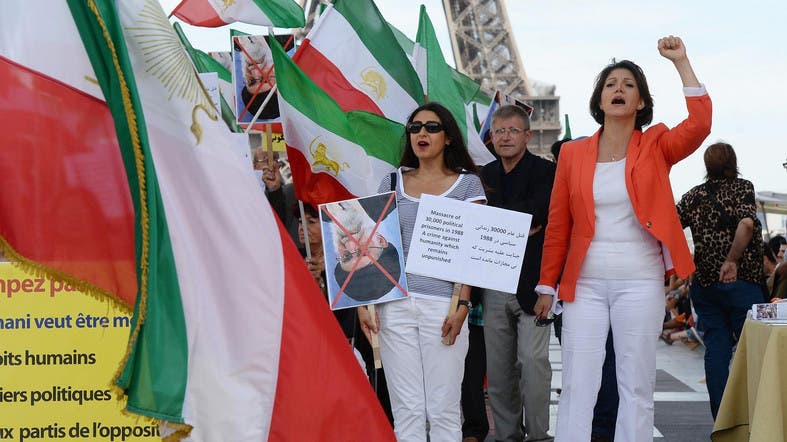
Remember the 1998 Massacre of 30,000 political prisoners in Iran”
BY SOONA SAMSAMI
The Hill, October 2, 2017 - For 40 days, 22 political prisoners staged a hunger strike in Gohardasht Prison in Karaj, 30 miles west of the Iranian capital of Tehran. Most are serving sentences for dubious political charges. In dire circumstances, they were only demanding their return back to bad conditions.
Their health deteriorated; international intervention was literally non-existent, limited to a few expressions of concern, but no practical measures to compel the Iranian regime to stop its inhumane treatment of prisoners of conscience.
Story of Resistance of a Young Girl Who Was Born in Notorious Iran Prison18 September 2017

By Jubin Katiraie
Sahar Gholamali, a member of the Iranian Resistance, recounted her life story. It can be read in full on the NCRI Women’s Committee website.
Suppression and oppression has been a part of her life since she was born, literally, as she was born in the notorious Evin Prison in Tehran during the eighties.
Her parents were both arrested for their political and social activities as they were supporters of the opposition Mojahedin (PMOI/MEK). They believed in freedom and opposed the regime that had established a religious dictatorship in the country.
Amnesty International Issue Urgent Action Notice for Iranian Female Prisoner Threatened With Extended Sentence Thursday, 28 September 2017 18:34

NCRI Staff
NCRI - In May this year, political prisoner Maryam Akbari Monfared’s husband, Hassan Jafari Hatam, was summoned to Tehran for an interrogation. He was unaware of why he would be summoned, but he went to the Ministry of Intelligence office anyway.
When he got there, he was abused and officials said that his wife’s sentence would be extended by an extra three years. They explained to Hassan that this was because his wife was writing about her siblings, and the tens of thousands of other political prisoners, who were killed during the 1988 massacre, in open letters from prison.
Last year, Maryam filed a formal complaint calling on an investigation into the 1988 massacre and has since written several open letters.
On Monday, Amnesty International published an updated Urgent Action notice regarding her case saying that she was threatened to an extended sentence because she is seeking justice for the unlawful massacre of 1988.
Amnesty International’s statement pointed out that Maryam’s official complaint has not been processed, and as a punishment authorities have denied her urgent medical appointments that are essential to treat her thyroid problems and issues with rheumatoid arthritis which is giving her severe pain.
Maryam has been in prison since the end of 2009. She was given a 15 year sentence on the charge of “enmity against God”, however her only “crime” was to speak to relatives over the phone who are members of the People’s Mojahedin Organization of Iran (PMOI). The PMOI is a legitimate opposition group that is fighting for the rights of the people of Iran.
Regarding the time just after her arrest, the notice from Amnesty International stated: “Maryam Akbari Monfared was arrested on 31 December 2009. For the next five months, her family remained unaware of her fate and whereabouts. She was held in solitary confinement during the first 43 days after her arrest, where she underwent intense interrogations and was denied access to a lawyer throughout. She met her state-appointed lawyer for the first time at her trial, which was limited to one brief session. In May 2010, she was sentenced to 15 years in prison after Branch 15 of the Revolutionary Court in Tehran convicted her of “enmity against God” (moharebeh). The court issued its verdict despite the absence of any evidence that she had been involved in armed activities. Amnesty International understands that Maryam Akbari Monfared was not provided with a written judgement, setting out the evidence and legal reasoning relied upon to convict her. Her husband has said that during her trial session, the judge told her she was paying for the activities of her relatives with the People’s Mojahedin Organization of Iran, a banned opposition group that advocates the overthrow of the Iranian government. Branch 33 of the Supreme Court upheld the sentence in August 2010.”
It added that despite Maryam’s request for a retrial, the Supreme Court decided that her case would not be heard again.
The 1988 massacre in Iran personally affected Maryam because her siblings were among the 30,000 victims. They were buried in mass unmarked graves.

EUROPE MUST NOT TURN A BLIND EYE TO IRAN’S HUMAN RIGHTS ABUSES


Amnesty International has just published a 94-page report entitled “Caught in a web of repression: Iran’s human rights defenders under attack.” It details 45 specific instances of what the organization has described as a “vicious crackdown” coinciding with the supposedly moderate presidency of Hassan Rouhani, who begins his second term in office this week.
The overall takeaway is that Iranian authorities have repeatedly diminished the standards by which they accuse and convict activists and dissenters of national security crimes, while also increasing the severity of punishments that are meted out to those same people. The abusive nature of those punishments was reinforced by new revelations that emerged alongside the Amnesty International report, mainly regarding the Islamic Republic’s notorious overuse of the death penalty.
Iran has long maintained world-leading rates of execution, and the violence and repression of the past few years have been reflected in a pattern of hangings that includes periodic spikes during which dozens of people are put to death in a single month. Last month saw just such a spike, with at least 101 death sentences being carried out, to say nothing of those that might have gone ahead in secret.
The Iranian Human Rights Organization announced that the Iranian authorities executed over one hundred people during the month of July. (File photo: Reuters)
In Iran, political prisoners are sentenced to hang with some frequency, usually on the basis of vague, religious charges like “enmity against God” or “insulting the sacred.”
Repressive, theocratic regime
Executions speak to the repressive nature of the theocratic regime, which has only grown worse in the era of Rouhani, when the government is fractured between two factions, neither of which represents reform. Maryam Rajavi, the president of the leading coalition of Iranian dissidents, the National Council of Resistance of Iran, responded to the new death penalty figures by saying, “Beset by crises and fearing popular uprisings, Iran’s ruling theocracy has found no other way out but to escalate repression especially by mass and arbitrary executions.”
The NCRI statement went on to recommend that the international community disregard economic and political incentives to expand relations with the Islamic Republic, and instead undertake measures to hold its officials accountable not only for recent crackdowns and executions, but also for long-neglected past crimes, like the massacre of some 30,000 political prisoners in the summer of 1988.
Naturally, being “beset by crises” and the possibility of popular overthrow, the regime is deeply fearful of this sort of pressure, which would imply Western readiness to stand behind a domestic uprising in Iran, and to aid it by making sure that Tehran is not free to carry out reprisals against dissenters as it sees fit.
Absurd claim 
Last month, Iran’s own so-called human rights monitor, Javad Larijani, made the absurd claim that the country does not hold any political prisoners. Immediately thereafter, foreign diplomats in Tehran were taken on a tour of the notorious Evin Prison, but human rights investigators were kept far away from the public relations stunt, while the diplomats were kept far away from wards that are known to house political prisoners almost exclusively.
Iranian Foreign Minister Javad Zarif has made similarly bold, easily ridiculed statements asserting the country’s innocence. But with or without the new Amnesty International report, no one with a modicum of knowledge of the Islamic Republic should ever take such claims seriously. Unfortunately, Zarif and other members of the Rouhani administration appear to be masterful at putting a friendly face on Iran’s clerical regime, even as its domestic abuses and foreign provocations continue to escalate.
 This is the only explanation for the fact that some Western officials, including European Union foreign policy Chief Federica Mogherini, agreed to attend this week’s re-inauguration of President Rouhani. These decisions were profoundly misguided, insofar as any Western presence at an Iranian state function presupposes that the relevant officials are turning a blind eye to human rights abuses that are not only continuing but escalating on Rouhani’s watch.
It is simply inconceivable that any of those officials are unaware of the information being shared by Amnesty and others. The most charitable explanation for their actions is that they do not hold Rouhani personally responsible for the crackdowns and are willing to offer their support to his administration in the hope that it will finally, after four years in office, begin to promote serious domestic reforms.
But if this is their thinking, it is painfully naïve. Rouhani has never been anything other than a loyal servant of the regime that tortures its citizens and imprisons them for upwards of 10 years simply for protesting previous human rights abuses. Soon after taking office in 2013 amidst the applause of Western officials, Rouhani thoroughly turned his back on human rights by appointing Mostafa Pourmohammadi, a leading figure in the 1988 massacre, as his justice minister.
Such officials must be brought to justice, lest the Iranian regime be convinced that it can get away with thousands of unlawful killings and still enjoy the presence of friendly European faces at its state functions. Justice will only be achieved when the international community has the courage to reject Iran’s absurd, anemic denials and to instead respond with new economic and diplomatic pressure to the regime’s human rights abuses.
originally published in the   english.alarabiya

HOW IRAN FEARS MEK AS ITS OPPOSITION


 by Pooya Stone
The regime in Iran has come under immense domestic and international pressure recently. Most vivid are the sweeping sanctions imposed by US Congress and signed into law by President Donald Trump.These developments are sparking an endless stream of reactions from Iran’s senior officials and various media outlets. Over 500 interviews, reports, posts, sessions, book introductions
and others events have been discussed in this regime’s official outlets,
all regarding the opposition People's Mojahedin Organization of Iran (PMOI/MEK).The reason behind this chorus of remarks and attacks aimed at the MEK is obvious. It is crystal clear for Iranian Supreme Leader Ali Khamenei and his entire regime apparatus how the MEK represent the source of all their strategic defeats.
Iran’s Revolutionary Guards (IRGC) has recently been classified as a Specially Designated Global Terrorist entity. This is mainly due to the hundreds of revelations, press conferences, articles, posts and other activities by the MEK and its umbrella group, the National Council of Resistance of Iran (NCRI).
The IRGC blacklisting is considered a strategic setback for Tehran, especially since 40% of the regime’s economy is controlled by the Guards.
The MEK also delivered major blow to Khamenei’s blueprints aimed at unifying his regime through engineering the May 19th presidential election. Conservative cleric Ebrahim Raisi, Khamenei’s preferred candidate, was groomed by the hardliners to replace the incumbent Hassan Rouhani as president.
The MEK’s vast network of activists inside Iran, coupled with a variety of measures abroad, shed light on Raisi’s past as a member of an infamous “Death Commission” in charge of supervising the 1988 massacre of over 30,000 political prisoners across the country who mostly were members of MEK.
As Raisi failed to reach the presidency, the mullahs’ entire apparatus suffered a major defeat, understood best by Khamenei himself.
The MEK best gained international credibility in 2002 after blowing the whistle on Iran’s clandestine nuclear weapons program. In the years since the MEK has maintained a solid record of revealing Iran’s secret and underground nuclear sites, forcing Tehran to succumb to a still highly-flawed agreement with the P5+1 aimed at curbing its nuclear program.
To this day Iran’s human rights violations have also been condemned in 63 resolutions issued in the past four decades by various United Nations organizations. UN special rapporteurs, such as Ahmed Shaheed and Asma Jahangiri, have condemned Iran in numerous texts. Again, the MEK’s role in alarming the world of the mullahs’ atrocities has been crucial.
Amnesty International and other such organizations, alongside numerous parliaments of the United Kingdom, Canada, Australia and the US Congress have also voiced their deep concerns and denounced Iran’s actions.
As our world becomes further connected through the Internet, the MEK and Iranian opposition supporters have taken to social media to enhance their effort against the mullahs.
Iran is known for its media and internet censorship, and yet social media and certain technology are allowing this young population connect with the outside world. This platform has provided means for the MEK and its vast network to express their desires and shed light on the truth about the mullahs’ devastating policies.
Sensing the dangers in this regard, Iran has stepped up its filtering efforts, especially the highly popular Telegram platform that enjoys dozens of millions of users in Iran. Telegram CEO Pavel Durov has recently underscored despite claims made by Tehran his company will not yield to this regime’s demands to censor any political channels.
Topping Iran’s concerns is the medium provided by the MEK and NCRI to realize a policy of successful regime change in Iran. As Washington weighs its comprehensive Iran policy and senior Trump administration officials have voiced support for regime change initiatives, this potential has become extremely concerning for Tehran.
“There are those who say the Islamic Republic will not reach its 40th year and they seek to topple the establishment in the coming years,” said Ahmad Jannati, chair of the ultraconservative Guardian Council in a recent session.
In addition to making remarks, conducting interviews and posting text in media outlets, Iran has also sought practical measures against its opposition.
Iranian Foreign Minister Mohammad Javad Zarif in Paris failed to convince French officials to prevent the MEK from holding its annual convention on their soil.
Kamal Kharrazi, career diplomat and former Iranian foreign minister, also went to Paris following the Iranian opposition rally in an attempt to place limitations on this opposition organization’s activity in France.
Through the years Tehran has reached this conclusion that maintaining its grip on power hinges heavily on eliminating its main opposition. During the past three decades, Khamenei and his regime pursued this path with all their will.
To this end, the MEK and NCRI represent the Iranian people’s true demand ofregime change in Iran. Supporting this opposition is tantamount to standing alongside the Iranian people.

A Look at Khomeini's Fatwa for PMOI/MEK Massacre + video & photos

Justice for Victims of Irans 1988 Massacre Demanded At Free Iran Rally

Justice for Victims of Irans 1988 Massacre Demanded At Free Iran Rally

By Jubin Katiraie
 IRAN FOCUS, 08 August 2017-- 29 years ago these days, in Iran under the mullahs’ regime, the massacre of over 30,000 political prisoners, mainly members, and supporters of the Iranian opposition People's Mojahedin Organization of Iran (PMOI/MEK) had engulfed all of Iran.
Khomeini
Khomeini''Death Decree' for mass executions of Iranian political prisoners in 1988.

Iran and Massacre of 30,000 MEK and Other Political Prisoners

By Jubin Katiraie
 #Iran Focus, August 4, 2017 - The US Senate voted almost unanimously last Thursday to impose new sanctions on #Iran. The legislation cracks down on #Iran’s activities including their missile development programs and human rights abuses. This is the first time that #Iran has been targeted for violation of Human Rights.
The Iranian regime massacred more than 30,000 political prisoners, most of whom were members and supporters of the main opposition group, (PMOI or MEK)

“Not later than 90 days after the date of the enactment of this Act, and annually thereafter, the Secretary of State shall submit to the appropriate congressional committees a list of each person the Secretary determines,

REGIME CHANGE IN IRAN AT REACH WITH THE ONLY ORGANIZED OPPOSITION (PMOI/MEK)

By INU Staff
INU - When confronted with the question of whether the Trump administrations backs regime change in Iran, Secretary of State Rex Tillerson said Washington would work with Iranian opposition groups to reach “peaceful transition of that government.”
The most organized and renowned Iranian opposition group is none other than the National Council of Resistance of Iran (NCRI) with the People's Mojahedin Organization of Iran (PMOI/MEK) being the core member of this coalition.
The MEK enjoys vast support both inside Iran and abroad, especially an unmatched network of activists who dare to show their support for NCRI President Maryam Rajavi and her movement at whatever opportunity.
Sen. John McCain (R-Ariz.) echoed Tillerson’s view, saying “it’s time the Iranian people had a free and open society and a functioning democracy,” effectively a call for regime change.
Just months ago Senator McCain paid a visit to Albania where most MEK members are currently stationed after a long ordeal in Iraq. The MEK was the target of numerous attacks by Iran-backed proxy groups and even the government of former Prime Minister Nouri al-Maliki prior to their departure of this country in 2016.
On July 1, a major convention was held in Paris where hundreds of political dignitaries from across the globe explicitly called for regime change in Iran and supporting the NCRI and MEK.
The MEK’s vast popular base was proven as over 100,000 members of the Iranian Diaspora rushed to Paris to express their support for Maryam Rajavi, the MEK and a free and democratic Iran.
Trump allies, including John Bolton, former U.S. ambassador to the United Nations during the George W. Bush administration were present and voiced their support for the convention’s cause.
“There is a viable opposition to the rule of the ayatollahs, and that opposition is centered in this room today. I had said for over 10 years since coming to these events, that the declared policy of the United States of America should be … to change the regime itself. And that’s why, before 2019, we here will celebrate in Tehran!”
We are currently at a period of analysis as the President’s National Security Council reviews Washington’s Iran policy.
The best and most realistic option before the Trump administration is supporting the pro-democracy coalition of dissidents, the NCRI, which is best able to mobilize other opposition groups into an even broader coalition. This, coupled with the MEK’s vast domestic network inside Iran, pose a major threat for the ruling regime in Tehran.
In his visit to Riyadh, President Trump also expressed strong views about extremist groups, sending a stark message to those supporting such entities.
“Drive them out of your places of worship,” Trump said of extremists, “drive them out of your holy land. Drive them out of this earth.”
After the July 1 convention in Paris, reports seen the next day indicated Trump might defy Tehran by signaling his willingness to consider supporting the Iranian opposition.
Iranian people and their resistance, with the NCRI and MEK at the helm, will bring about the “regime change from within.” And that is where U.S. and international support will help.
Washington benefits from aligning with the Iranian opposition NCRI and MEK because this resistance is seeking regime change to bring about democracy and freedom for the Iranian people, and the region, and merely peace and security for the whole world by rooting out the central exporter of terrorism and Islamic extremism. Which is the religious fascism ruling Iran.
Thus, President Trump has before him the option of reaching out to the Iranian opposition during his review of Iran policy.

MEK'S POPULARITY AMONG IRANIAN YOUTH, REGIME'S NIGHTMARE

Written by Poorang Novak
  Published: 30 July 2017

CONTRARY TO IRAN LOBBY CLAIMS, REGIME CHANGE DOES NOT END IN WAR

One of the great falsehoods of the Iran lobby and the appeasers of the clerical regime in Tehran is that any effort at regime change would inevitably lead to war. This by-line can be seen in every article by the Iran lobby and the appeasers attempting to underscore the growing global support for the Iranian opposition (MEK/PMOI) and the Iranian people’s quest for regime change.
History teaches us though that the longevity of any regime born out of violent conquest is ultimately short-lived.
The Iranian regime that was born out of a revolution overthrowing the Shah, which was in turn hijacked by the mullahs and turned into a religious oligarchy. The original aim of the revolution was the formation of a secular, pluralistic democracy. That dream still exists in the hearts and minds of the overwhelming majority of the Iranian people and resonates in the various forms of protest in Iran, despite the repressive measures by the regime. Therefore, the call for “regime change” is primarily the Iranian people’s demand.

New US Sanctions, Iran and Massacre of 30,000 Political Prisoners


Adoption of a bill by both chambers of the US Congress, imposing new sanctions on Iran, has terrified the Iranian regime. The sanctions includes Iran’s ballistic missile program, terrorism, and violation of Human Rights.
Concerning the violation of Human Rights part of the bill says:
“Not later than 90 days after the date of the enactment of this Act, and annually thereafter, the Secretary of State shall submit to the appropriate congressional committees a list of each person the Secretary determines, based on credible evidence, on or after the date of the enactment of this Act (1) is responsible for extrajudicial killings, torture, or other gross violations of internationally recognized human rights committed against individuals in Iran who seek (A) to expose illegal activity carried out by officials of the Government of Iran; or (B) to obtain, exercise, defend, or promote internationally recognized human rights and freedoms, such as the freedoms of religion, expression, association, and assembly, and the rights to a fair trial and democratic elections; or … “

MEK/PMOI Popularity Threat to Iranian Regime's Existance

By: Jubin Katiraie
For many associated with the Iranian lobby and appeasers of the clerical regime in Tehran, the best way to prop up the regime is to discredit any alternative options presented to the international community. In addition, the lobby and appeasers continue to stress that regime change will lead to war. As an example, they point to the struggles of the Iraq government since the removal of Saddam by the U.S. and its allies.
However, history teaches us that any regime’s existence is limited when it begins with a violent upheaval. The current Iranian regime was born out of a revolution to end the rule of the Shah, but that revolution’s goal was to create a secular, pluralistic, and democratic Iran. However, the mullahs hijacked the revolution, creating a theocracy and suppressing any alternative political voices, including the MEK/PMOI.
Instead, to consolidate their power, the Iranian regime has relied on the typical tools of oppression, including the creation of a paramilitary and judiciary system that touches every section of Iranian society. The regime, using its lobby and appeasers, have been quick in attacking any publication or personalities that dare to speak up about the quest of the Iranian people to achieve their original dream of a democratic Iran.
Anyone who dares to talk about “regime change” is targeted for repressive measures. The MEK/PMOI have been high on the regime’s list, since the MEK/PMOI are the most dedicated and organized opposition with extensive routes and support at home, with the ability to materialize regime change.
The people’s Mojahedin Organization of Iran (PMOI/MEK) has been the subject of propaganda campaigns by the Iranian Ministry of Intelligence and Security (MOIS) at home and by regime lobbies and appeasers throughout the international community. This campaign is focused on discrediting the MEK/PMOI, by saying there is no democratic alternative to the Iranian regime and that regime change will result in war and increased instability within the region.
But why is the MEK/PMOI being targeted so directly? The MEK/PMOI is the oldest, largest, and most popular resistance movement within Iran. They form the core of the National Council of Resistance of Iran (NCRI), which is a coalition of opposition groups from all sectors of Iran. The PMOI/MEK was founded in September 1965 by three Iranian engineers who wanted to replace the Shah’s dictatorship with a democracy.
It is this continued support of democracy that has kept the MEK/PMOI so popular among Iranians. The MEK/PMOI believes that Islam is inherently tolerant and democratic, and fully compatible with the values of modern-day civilization. This vision is the cure to the current spread of extremism, which can be traced back to Iran and its mullahs. Yet, during the time of upheaval after the revolution, the MEK/PMOI leaders witnessed Ayatollah Khomeini’s hijacking of the revolution to create his theocracy.

ANALYSIS: Understanding Iran’s missile belligerence


By Heshmat AlaviSpecial 
to Al Arabiya English
Sunday, 30 July 2017
Iran has recently witnessed increasing pressures from both sides of the Atlantic, especially over its ballistic missile ambitions. After weeks of deliberations, the US Congress passed initiatives imposing unprecedented restrictions on Tehran.
Just one day after Iran test-launched a satellite-carrying rocket, the Europeans on Friday joined their American allies in sharpening their tone on Iran’s mullahs, demanding an immediate cessation.
The US Treasury Department also responded sharply, imposing even further sanctions on six companies owned or supervised by the Shahid Hemmat Industrial Group, known to play a central role in Tehran’s ballistic drive. All their US assets have been frozen and US citizens barred from dealing with the six firms.
As expected, Iran has continued its refusal to cooperate. “We will continue with full power our missile program,” said Iranian Foreign Ministry spokesman Bahram Ghasemi to state broadcaster IRIB.
Iran Focus
London, 29 Jul - During the summer of 1988 a fatwa was issued that resulted in massive executions within Iran’s prisons. Estimates place the number of victims at around 30,000, most of whom had affiliations with the People’s Mojahedin Organization of Iran (PMOI/MEK).
The proposed successor of Khomeini, Ayatollah Hossein Ali Montazeri, was dismissed and sentenced to house arrest because of his objections to this massacre. Last year, an audio tape was published by Montazeri’s son. On it, you can hear the late Ayatollah Montazeri addressing members of the committee of executioners (commonly known by Iranians as The Death Committee). He describes this massacre as the worst crime in the history of the Islamic Republic, and named Ibrahim Raisi, Mostafa Pour Mohammadi, Hossein Ali Nayeri and other coordinators as criminals.
Ali Fallahian, who was the minister of intelligence during the Rafsanjani government, said in a recent television interview, “The view of Mr. Montazeri, who disagreed with Imam (Khomeini), was that these executions will ultimately cause a “historical judgment” against us, a judgement against Islam, so it is to our benefit not to conduct these executions, but Imam said that you must perform your religious duty and don’t wait for the judgment of history.”
Thanks to the Iranian opposition, a call for justice was started last year, and families of the victims of the 1988 massacre are seeking justice for their loved ones. The mass executions were carried out in secret and the dead were buried in mass graves at night.

LEADING OFFICIALS OF IRANIAN REGIME ADMIT THE MASSACRE OF MEK MEMBERS

 
Written by Jazeh Miller
  Published: 29 July 2017
Iranian regime massacred over 30,000 political prisoners in summer of 1988, and kept silent about this atrocity for three decades. Most of the victims were members and supports of the main opposition group the People’s Mojahedin Organization of Iran (PMOI/MEK). This year in the presidential election as conservative cleric Ebrahim Raisie, one of the perpetrators of the massacre, was selected as one of the main candidates, the issue surfaced, forcing regime officials, one after another, to confess about the carnage.
Last week in an unprecedented interview, Ali Fallahian, the former Iranian intelligence Minister, revealed the mindset behind the mass execution of summer of 1988. Ali Fallahian, who was called as “the most feared mullah in Iran” by the News Week is wanted by Interpol for his involvement in the AMIA bombing that killed 85 people on July 18, 1994 in Buenos Aires, Argentina.
In the interview, Fallahian explained that whoever had any relation with the MEK was condemned to death.

Why Iran Apologists Demonize the MEK?

By Jubin Katiraie
The U.S. Senate voted almost unanimously on Thursday to pass new sanctions on Russia, North Korea and Iran.
The officials of Iranian regime are already afraid of the consequences of the new sanctions. In addition to economic implications of the sanctions, what worries them the most is the actions against the Islamic Revolutionary Guards Corps (IRGC) as a terrorist organization. Designating and imposing sanctions on the IRGC was long overdue because the IRGC serves as the guarantee to preserve the entirety of the regime ruling Iran and is the main entity responsible for domestic suppression, the export of terrorism and extremism, and obtaining weapons of mass destruction such as nuclear weapons and ballistic missiles.
The new bill has added to already shaky regime’s fears. Janati, the head of the Guardian Council announced on Thursday that the main issue which has preoccupied the Supreme leader is his concern over regime change.

Regime change was the main topic of the July 1, 2017 annual gathering of Iranian resistance (The Mujahedin-e-Khalq or MEK) in Paris. Many speakers talked about the regime change and their support for the MEK.MEK
“I’m happiest to be here because I can say, can probably say this with a good deal of authority, that the government of the United States supports you” Rudy Giuliani former mayor of New York City said referring to MEK supporters in the gathering.

How blood of innocents has become an endless nightmare for Iranian regime


People chant slogans and hold pre-revolutionary Iranian flags in Paris, on August 17, 2013, as they take part in a rally marking the 25th anniversary of the 1988 massacre of Iranian political prisoners. (AFP)
By F. Mahmoudi: Special to Al Arabiya EnglishThursday, 27 July 2017
In Iran, 1980s is known as a bloody decade as thousands of political opponents were executed in brutal mass murder.
In the summer of 1988, a massive slaughter took place in Iran’s prisons. Ayatollah Hossein Ali Montazeri, the successor of Khomeini, was dismissed as a result of his objection to this massacre.
In September 2016, an audio tape from a meeting of the late Ayatollah Montazeri with members of the committee of executioners (commonly known by Iranians as death committee) was published by his son, which led to his arrest and prosecution.
In the audio tape, Ayatollah Montazeri described this massacre as the worst crime in the history of the Islamic Republic, and named Ibrahim Raisi, Mostafa Pour Mohammadi, Hossein Ali Nayeri and other coordinators as criminals.

Two years into JCPOA, Iran needs regime change Read more: http://www.americanthinker.com/blog/2017/07/two_years_into_jcpoa_iran_needs_regime_change.html#ixzz4o8oLq8KS Follow us: @AmericanThinker on Twitter | AmericanThinker on Facebook

 by Shahriar Kia

july 14 marked the second anniversary of the nuclear deal signed between Iran and the P5+1 in Vienna back in 2015.
This pact was reached fundamentally by sanctions against Tehran due to continuous revelations made by the Iranian opposition People's Mojahedin Organization of Iran (PMOI/MEKMEK), being the first to blow the whistle on Tehran's nuclear weapons ambitions.
The possibility was at hand to completely uproot Iran's nuclear bomb-making facilities.  The West's appeasement policy in the face of Tehran and unnecessary concessions provided to the mullahs, parallel to the windfall of billions gifted to Iran as sanctions were lifted, only fueled the flames of war in Syria, Iraq, and Yemen.  Despite all the concessions provided, Iran has been anything but contained.

US Intelligence Predicts Attack From IranTerrorism 28 September 2018 Iran Focus London, 28 Sep - US intelligence suggests that Iranian-backe...