center> Important News Iran stars: PMOI
div style="margin: 15px 0px 0px; display: inline-block; text-align: center; width: 200px;">
Showing posts with label PMOI. Show all posts
ANALYSIS: Is Iran’s intransigence whiplashing onto its population?
10/2/2017 1:46:11 PM

An Iranian woman after rubbing mud on her body during a ritual to mark the Ashura in Khorramabad on October 1, 2017.
By Heshmat Alavi
Al Arabiya, 2 October 2017 -Iran’s aggressions across the Middle East and its support for terrorist and fundamentalist organizations have raised strong remarks from senior regional officials and their American counterparts. And the impact is whiplashing back into Iran’s population.
Iran is ramping up its illicit activities across the Middle East, especially in Syria and Iraq, and threatens free navigation in international waters, according to the US military’s top officer, Chairman of the Joint Chiefs of Staff Gen. Joseph Dunford, as he explained his concerns to the Senate Armed Forces Committee at a recent hearing.

Q&A by Struan Stevenson, with PMOI website

Q&A by Struan Stevenson, with PMOI website
Straun Stevenson speaks to the MEK website
Struan Stevenson, was a member of the European Parliament (MEP) for Scotland from 1999-2014. During that time, he chaired the Friends of a Free Iran intergroup, which became the centre of pro-democracy campaigns in Europe in support of human rights in Iran. He also chaired European Parliament’s official Delegation for Relations with Iraq. He has written several books on different topics including a book called Self Sacrifice, originally in English and translated to French and German, which explains about the Iranian resistance.
The following is an interview done by him with the PMOI/MEK website.

Iran Focus
London, 18 Sep - As the international community seeks legal justice for the perpetrators of the massacre of members and sympathizers of PMOI/MEK in 1988, the government in Tehran seeks to destroy the graves of MEK martyrs killed in this criminal act.
Signs of this MEK genocide are being eliminated in several cities, including Ahvaz (southwestern Iran), Mashhad (northeast), Isfahan (center of Iran), Tabriz and Ardabil (northwestern), and others. Mass graves of MEK members are being destroyed, and family members are unable to pay tribute to their loved ones. In previous years, the families have shown respect by cementing the graves and removing the garbage.

Iran: Foreign diplomats tour of Evin prison a 'crude PR stunt'

In Iran and around the world, Evin prison is symbolic of Iran’s rampant political repression

In Iran and around the world, Evin prison is symbolic of Iran’s rampant political repression
Amnesty International, 13 July 2017--  Last week the Iranian authorities arranged a rare visit to one of the country’s most infamous prisons for representatives of up to 45 foreign diplomatic missions from Europe, Asia, Africa and South America.
The authorities made no secret of the fact that the tour of Evin Prison in Tehran was designed to counter negative Human rights reports about the prison, and showcase the “excellent facilities” on offer which include an in-house beauty salon, gym, library and restaurant.
In the days that followed, state media outlets were flooded with news stories praising conditions at the prison including congratulatory comments from Indian, Indonesian, Portuguese and South Korean delegates.
In reality, this rosy picture could not be further from the truth.
Research by Amnesty International and other Human rights organizations over the years points to inhumane and unsanitary conditions at Evin Prison. Chronic overcrowding, severely limited hot water, poor ventilation, and infestations of cockroaches and mice, particularly near kitchen areas, are among the most common complaints.
Research by Amnesty International and other Human rights organizations over the years points to inhumane and unsanitary conditions at Evin Prison.
 RahBahreini

Prisoners have described being forced to sleep on the floor, including during cold winter months due to a shortage of beds and being fed “barely edible” meals.  Prisoners who are lucky enough to afford to do so can purchase food at their own expense from the prison shop.
Evin Prison is a vast complex that consists of multiple buildings, generally up to three floors high with two sections on each floor. Conditions across the prison sections vary greatly.
The much raved about beauty salon, gym, library and restaurant are only accessible to prisoners held in building 7.
Unsurprisingly many areas of the prison remained off limits to the foreign delegates. They were only granted access to a handful of sections in buildings 4 and 7, mostly housing wealthier prisoners convicted of financial crimes. In these areas, prisoners have used their own funds to boost conditions, buying carpets, curtains, televisions, air conditioning units, kitchenware and other furnishings.
Amnesty International learned that ahead of the visit the authorities transferred some prisoners from these sections to other areas in order to alleviate overcrowding and painted walls. They also warned prisoners against approaching the diplomats and expressing any criticism.
In Iran and around the world, Evin prison is symbolic of Iran’s rampant political repression. It has held hundreds of peaceful activists, journalists, intellectuals and Human rights lawyers throughout its disgraceful history.

Yet foreign delegates were not allowed to visit areas of the prison that hold dozens of prisoners of conscience including Human rights activists. These include building 350, which holds prominent Human rights lawyer Abdolfattah Soltani and severely ill Human rights defender Arash Sadeghi; building 8, which holds Human rights defender Omid Alishenas,and the women prisoners’ wing which holds Human rights defenders Narges Mohammadi, Golrokh Ebrahimi Iraee and Atena Daemi.
The delegation was also barred from accessing areas controlled by the Ministry of Intelligence and Revolutionary Guards, where detainees are routinely subjected to torture and other ill-treatment.
They were also unable to meet dual nationals held in the prison on spurious charges.


Crude game of deception


The highly publicized visit to Evin prison was clearly a PR stunt orchestrated by the Iranian authorities to cover up the dark truth about the prison.
Speaking after the visit, Kazem Gharibabadi of Iran’s High Council of Human rights made the ludicrous claim that prisoners in Iran enjoy “perfect access to medical care”. This stands in stark contrast to the findings of an Amnesty International report, which highlighted how political prisoners are deliberately denied access to adequate medical care as further punishment.
He also claimed that the conditions at Evin are typical of the high standards of prisons across the country.
The highly publicized visit to Evin prison was clearly a PR stunt orchestrated by the Iranian authorities to cover up the dark truth about the prison
Raha Bahreini
Such false claims by the Iranian authorities are an affront to the hundreds of prisoners over the years who have suffered behind bars at Evin prison.
The foreign delegates who took part in this tour may not have known in advance that they would be getting such a limited, distorted view of conditions in this notorious prison. But it should be very clear to them now that they are
being used by Iranian authorities to validate their crude propaganda. They must speak out against torture and other ill-treatment of prisoners in Iran and the arbitrary detention of peaceful critics and Human rights defenders and demand that the authorities open Evin and other prisons to independent monitors.
If the Iranian authorities are truly interested in improving their reputation, they must urgently address overcrowding, and ensure access to adequate food, water, medical care, hygiene and bedding for all prisoners. They should also end the use of torture and other ill-treatment, treat detainees with dignity and humanity, release unjustly imprisoned peaceful DISSIDENTS, and allow international monitors, including the UN Special Rapporteur on the situation of Human rights in Iran, to conduct independent, unannounced inspections of Evin and other prisons in line with international standards.
Only through such steps and can Iran truly establish confidence in the country’s prison system.

Among the states who took part in the tour are:


Algeria, Australia, Belgium, Benin, Bolivia, Bulgaria, Czech Republic, Croatia, Denmark, Germany, Hungary, India, Indonesia, Japan, Luxemburg, Malaysia, Nigeria, Norway, Poland, Portugal, Romania, Slovakia, South Korea, Sweden, Switzerland, Tunisia, Uganda, Ukraine, United Kingdom, Vatican

N. Korea likely has more plutonium than previously thought: monitor

File , People watch a television news broadcast showing a North Korean announcer reading a statement on the countrys new ICBM test, at a railway station in Seoul on July 4, 2017

File , People watch a television news broadcast showing a North Korean announcer reading a statement on the countrys new ICBM test, at a railway station in Seoul on July 4, 2017
SEOUL, AFP, 15 July 2017 - mNew images of North Korea's main nuclear facility show that the isolated regime has apparently produced more plutonium for its weapons programme than previously thought, a US monitor said, as tensions soar over Pyongyang's ambitions.
The respected 38 North website, a monitoring project linked to Johns Hopkins university, said Friday that thermal imagery of the Yongbyon nuclear complex appeared to show that Pyongyang had reprocessed spent fuel rods at least twice between last September and June this year.

Trump's Iran Policy Review and Regime Change From Within

People hold a banner reading Regime change in Iran during the National Council of Resistance of Iran (CNRI) annual meeting People hold a banner reading Regime change in Iran during the National Council of Resistance of Iran (CNRI) annual meeting


14 Jul 2017 --  A part of Trump’s Iran policy review is the nuclear deal with Iran. This Saturday, July 15, marks the second anniversary of the Iran nuclear deal. Is there a different policy likely under President Trump? Yes: regime change from within, with pro-democracy Iranian oppositionists as core of a new policy.
Last month, Secretary of State Tillerson hinted regime change was the intent of Trump, and both have made no secret of their dislike of the Islamic Republic. At a session of the House Foreign Affairs Committee, Tillerson said the president’s policy toward Iran would be to work toward support of those elements inside of Iran that would lead to a peaceful transition. Outside the administration, Trump’s national security supporters like Amb. John Bolton (ret.), also have spoken favorably about regime change from within.
There’s confusion over the nature of regime change. The CIA-UK intelligence operation to overthrow an Iranian government in 1953 differs from the idea of regime change from within, spearheaded by the National Council of Resistance of Iran ( NCRI NCRI), a coalition of dissident groups. NCRI is best able to lead a broader coalition of opposition organizations that reject clerical rule in Iran and are willing to support regime change from within.
Also, there’s a new “Sheriff in town,” President Trump. He is a deal-maker; for Trump, closing the deal with friends and adversaries alike is important to him. If Europeans are doubtful of the direction of his policies, it is fine with the Sheriff to keep them guessing.

That said, deal-closing is within the context of core principles:


The conflicts we face are barbaric radical Islamist terrorism versus civilization, e.g., stable nation-states respecting traditional universal standards in general and western norms in particular. Trump’s message comes out clearly in his Riyadh address, the theme of which is, “Drive them out. Drive them out of your places of worship,” Trump said, “drive them out of your holy land. Drive them out of this earth.”
The Iranian resistance benefits from aligning with the United States because the resistance is in the camp of civilized states and never has committed acts of barbarism. Hence, Trump is more likely to reach out to pro-democracy Iranian oppositionists during his review of Iran policy than President Obama. He valued the nuclear deal with Tehran too much to jeopardize it by opening up to the resistance.
After a July 1 rally in Paris I attended as a scholar to conduct interviews, Fox News reported the next day the president might defy the regime by signaling his willingness to look kindly on the resistance: “The Trump administration is potentially considering…a strategy to try to topple the regime.”
But the NCRI does not need U.S. forces to change the regime, only American political and economic support to effect regime change from within. Even if not going so far as toppling the regime, Trump could increase his leverage against the Ayatollahs by supporting the resistance, conditioned on its continued eschewing of terrorist tactics.
With respect to missiles, for example, critics hoped in vain the nuclear deal would place explicit limits on ballistic missiles. The burden, however, was left to the UN, rather than on parties to the deal.
Paragraph 3 of Annex B of resolution 2231 (2015) calls upon Iran not to undertake any activity related to ballistic missiles capable of delivering nuclear weapons, including launches using ballistic missile technology. Because the nuclear deal did nothing to address the full range of Iran’s ballistic missile development, weak missile language in this resolution compounded the problem.
Before the July 2015 nuclear deal, Iran was expressly prohibited by UN resolutions from launching ballistic missiles capable of carrying nuclear weapons. Security Council Resolution 1929 states the Council “decides that Iran shall not undertake any activity related to ballistic missiles capable of delivering nuclear weapons.” The term “decides” placed a firm legal obligation on all states to comply.
For Tehran’s agreement with the nuclear deal, the Obama administration unwisely granted Iran flexibility for ballistic missile testing. Security Council Resolution 2231 certified the nuclear deal, replacing the prohibition with weaker language: “Iran is called upon not to undertake any activity related to ballistic missiles designed to be capable of delivering nuclear weapons.” Holes in the missile technology side of the nuclear deal equation would be sealed; on the sanctions side, there should be prohibition of relief in the event of Iran’s continued participation in state-sponsored terrorism and human rights violations.
If not postponed, the policy review for Iran and anniversary of the Iran nuclear deal coincide this coming Saturday. European diplomats say a drawn-out period of the review period could crimp the effectiveness of the nuclear deal. But President Trump, the consummate deal-maker, welcomes their discomfort and takes advantage of their wariness over his next steps.
 
Prof. Raymond Tanter (@AmericanCHR) served as a senior member on the Middle East Desk of the National Security Council staff in the Reagan-Bush administration, Personal Representative of the Secretary of Defense to international security and arms control talks in Europe, and is now Professor Emeritus at the University of Michigan. Tanter is on the comprehensive list of conservative writers and columnists who appear in The Wall Street Journal, Townhall.com, National Review, The Weekly Standard, Human Events, The American Spectator, and now in Newsmax. To read more of his reports 

Iran expands its terrorist sponsorship in the Balkans

The Balkan and Eastern European countries are targeted by the mullahs regime
The Iranian regime massacred more than 30,000 political prisoners, most of whom were members and supporters of the main opposition group, (PMOI or MEK)
By Pejman Amiri 
AmericanThinker, August 5, 2017 - The U.S. Congress's recent bill of sanctions on Iran mainly cites the Iranian regime's terrorist activities throughout the Middle East.
The recently released Country Reports on Terrorism 2016 by the U.S. State Department says:
Iran continued its terrorist-related activity in 2016, including support for Hizballah, Palestinian terrorist groups in Gaza, and various groups in Syria, Iraq, and throughout the Middle East. Iran used the Islamic Revolutionary Guard Corps‑Qods Force (IRGC-QF) to implement foreign policy goals, provide cover for intelligence operations, and create instability in the Middle East. Iran has acknowledged the involvement of the IRGC-QF in the conflicts in Iraq and Syria and the IRGC-QF is Iran's primary mechanism for cultivating and supporting terrorists abroad.

Iran and Massacre of 30,000 MEK and Other Political Prisoners

By Jubin Katiraie
 #Iran Focus, August 4, 2017 - The US Senate voted almost unanimously last Thursday to impose new sanctions on #Iran. The legislation cracks down on #Iran’s activities including their missile development programs and human rights abuses. This is the first time that #Iran has been targeted for violation of Human Rights.
The Iranian regime massacred more than 30,000 political prisoners, most of whom were members and supporters of the main opposition group, (PMOI or MEK)

“Not later than 90 days after the date of the enactment of this Act, and annually thereafter, the Secretary of State shall submit to the appropriate congressional committees a list of each person the Secretary determines,

REGIME CHANGE IN IRAN AT REACH WITH THE ONLY ORGANIZED OPPOSITION (PMOI/MEK)

By INU Staff
INU - When confronted with the question of whether the Trump administrations backs regime change in Iran, Secretary of State Rex Tillerson said Washington would work with Iranian opposition groups to reach “peaceful transition of that government.”
The most organized and renowned Iranian opposition group is none other than the National Council of Resistance of Iran (NCRI) with the People's Mojahedin Organization of Iran (PMOI/MEK) being the core member of this coalition.
The MEK enjoys vast support both inside Iran and abroad, especially an unmatched network of activists who dare to show their support for NCRI President Maryam Rajavi and her movement at whatever opportunity.
Sen. John McCain (R-Ariz.) echoed Tillerson’s view, saying “it’s time the Iranian people had a free and open society and a functioning democracy,” effectively a call for regime change.
Just months ago Senator McCain paid a visit to Albania where most MEK members are currently stationed after a long ordeal in Iraq. The MEK was the target of numerous attacks by Iran-backed proxy groups and even the government of former Prime Minister Nouri al-Maliki prior to their departure of this country in 2016.
On July 1, a major convention was held in Paris where hundreds of political dignitaries from across the globe explicitly called for regime change in Iran and supporting the NCRI and MEK.
The MEK’s vast popular base was proven as over 100,000 members of the Iranian Diaspora rushed to Paris to express their support for Maryam Rajavi, the MEK and a free and democratic Iran.
Trump allies, including John Bolton, former U.S. ambassador to the United Nations during the George W. Bush administration were present and voiced their support for the convention’s cause.
“There is a viable opposition to the rule of the ayatollahs, and that opposition is centered in this room today. I had said for over 10 years since coming to these events, that the declared policy of the United States of America should be … to change the regime itself. And that’s why, before 2019, we here will celebrate in Tehran!”
We are currently at a period of analysis as the President’s National Security Council reviews Washington’s Iran policy.
The best and most realistic option before the Trump administration is supporting the pro-democracy coalition of dissidents, the NCRI, which is best able to mobilize other opposition groups into an even broader coalition. This, coupled with the MEK’s vast domestic network inside Iran, pose a major threat for the ruling regime in Tehran.
In his visit to Riyadh, President Trump also expressed strong views about extremist groups, sending a stark message to those supporting such entities.
“Drive them out of your places of worship,” Trump said of extremists, “drive them out of your holy land. Drive them out of this earth.”
After the July 1 convention in Paris, reports seen the next day indicated Trump might defy Tehran by signaling his willingness to consider supporting the Iranian opposition.
Iranian people and their resistance, with the NCRI and MEK at the helm, will bring about the “regime change from within.” And that is where U.S. and international support will help.
Washington benefits from aligning with the Iranian opposition NCRI and MEK because this resistance is seeking regime change to bring about democracy and freedom for the Iranian people, and the region, and merely peace and security for the whole world by rooting out the central exporter of terrorism and Islamic extremism. Which is the religious fascism ruling Iran.
Thus, President Trump has before him the option of reaching out to the Iranian opposition during his review of Iran policy.

IRAN'S FEAR OF REGIME CHANGE BY IRANIAN PEOPLE AND THEIR RESISTANCE (PMOI/MEK)

 Written by Poorang Novak
  Published: 28 July 2017
Lethal international, economic and social crises that has plunged the Iranian regime into the dilemma it is currently facing on one hand, and the expanding support for the Iranian opposition MEK that can realize regime change in Iran on the other, have all injected utter fear amongst Tehran’s mullahs.
US policymakers are coming closer to the necessary solution of regime change to confront Tehran as the leading sponsor of terrorism and human rights violator, as a regime that oppresses its own people and threatens neighboring nations.
However, this regime change is different from previous examples through military action and foreign war. In Iran, considering the existence of an organized opposition with deep social roots and a social base inside Iran, symbolized in the MEK, is able to realize this objective of toppling the mullahs’ regime

Imposing New Sanctions on Iran's Clerical Regime and Designating the Revolutionary Guards (IRGC) as Terrorist Entity, Constitutes an Essential Step in the Right Direction That Needs to Be Completed by Other Measures

The Iranian Resistance welcomes the adoption of a bill by the US House of Representatives, imposing new sanctions on the clerical regime for violating human rights and pursuing ballistic missiles, and designating the Islamic Revolutionary Guards Corps (IRGC) as a terrorist entity. This is an essential step in rectifying the damaging policy of appeasement that needs to be completed by other measures including the eviction of the IRGC and its affiliated militia particularly from Syria and Iraq as well as the recognition of the Iranian people’s right to overthrow the clerical regime.

Iranian dissidents rally in France for the overthrow of Iran’s theocracy

- - Monday, July 17, 2017
VILLEPINTE, France — Thousands of supporters of an Iranian dissident group rallied here Saturday for the overthrow of Tehran’s theocratic regime at an event that featured speeches by several Trump administration allies — including Newt Gingrich and Rudolph W. Giuliani — as well as the former head of Saudi intelligence.The boisterous event, held annually in this town just north of Paris, was organized by the National Council of Resistance of Iran, a France-based group of Iranian exiles that brings dozens of current and former U.S., European and Middle Eastern officials together to speak out in support of regime change in Tehran.

2 years into nuclear deal, US policy on Iran needs major makeover

2 years into nuclear deal, US policy on Iran needs major makeover
July marks the second anniversary of the nuclear agreement between the Iranian regime and the five permanent members of the U.N. Security Council plus Germany. Former U.S. President Barack Obama envisioned the agreement — known as the Joint Comprehensive Plan of Action (JCPOA) — as a potential starting point for a broader rapprochement between the ruling theocracy and the West.

Iran: Foreign diplomats tour of Evin prison a 'crude PR stunt'

In Iran and around the world, Evin prison is symbolic of Iran’s rampant political repression

In Iran and around the world, Evin prison is symbolic of Iran’s rampant political repression

Amnesty International, 13 July 2017--  Last week the Iranian authorities arranged a rare visit to one of the country’s most infamous prisons for representatives of up to 45 foreign diplomatic missions from Europe, Asia, Africa and South America.
The authorities made no secret of the fact that the tour of Evin Prison in Tehran was designed to counter negative Human rights reports about the prison, and showcase the “excellent facilities” on offer which include an in-house beauty salon, gym, library and restaurant.

Iran: Protest and hunger strike in Ardabil, Ilam, Arumé and Yassoug+ pictures


The strike of the workers of the steel company in Ardebil continues

Iran, July 14, 2017 - Various protest rallies and a hunger strikes took place onWednesday July 12 in Ardebil, Orumieh and Yassouj.

Legacy of a dictator: Iran's 30,000 murdered, then and now

Legacy of a dictator Irans 30,000 murdered, then and now
By Hassan Mahmoudi
 July 14, 2017-- In the wake of the 30th anniversary of the massacre of 30,000 political prisoners in summer of 1988 in Iran, the people of Iran and especially families of the victims are still waiting for justice and an international tribune.
In the summer of 1988, the political prisoners were systematically executed in almost two months.  In a barbaric two-month purge, prisoners, including teenagers as young as 14, were loaded onto trucks in groups and hanged from cranes.

Iran Opposition Unveils IRGC Missile Sites

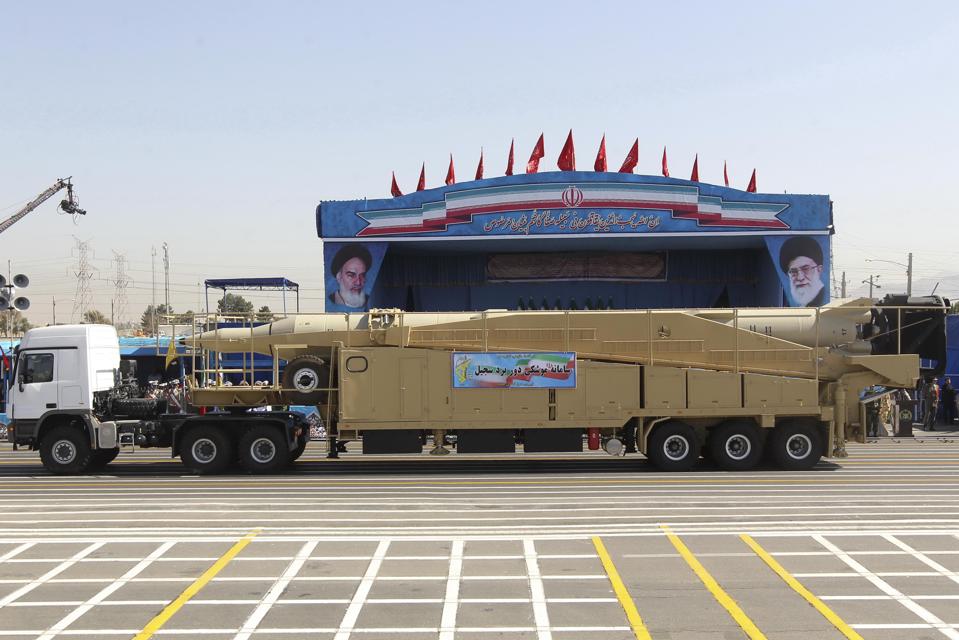
Iran has been pursuing an extensive ballistic missile program through dozens of very important sites, including twelve unknown to this day and one specifically linked to its highly sensitive and controversial nuclear program, the Iranian opposition National Council of Resistance of Iran (NCRI) revealed at a press conference Tuesday in Washington.

MEK Network Changes the Scene of Iran's Presidential Election

Iran Focus 
London, 19 May - In the final day or so before the so-called presidential “election” in Iran between incumbent President Hassan Rouhani and Ebrahim Raisi, a cleric with close ties to the Supreme Leader, the scene on the ground is far different from the portrait painted by the regime’s state-run media and some western outlets.
The vast network of dissidents supporting the Iranian opposition People's Mojahedin Organization of Iran (PMOI/MEK) has come alive in unprecedented scale to voice the true feelings of the Iranian people about the candidates and the regime in its entirety.
Cities and towns across the country, including major metropolitan centers such as Tehran, Mashhad, Isfahan, Tabriz and Shiraz, have been scenes of brave activists daring many odds and challenges to put up large posters and images of Iranian opposition leader Maryam Rajavi from bridges and overpasses, car windshields and even the walls of buildings belonging to the regime’s security forces, such as the Revolutionary Guards Bassij.

INTERNATIONAL COMMUNITY MUST SUPPORT MEK/PMOI IN THE HEART OF THE IRANIAN RESISTANCE


By INU Staff
INU - There are many around the world who are pondering what the correct diplomatic response to the Iranian Regime should be and even those at those in charge of foreign policy aren’t entirely sure, given Secretary of State, Rex Tillerson’s recent comment that the US’s Iran policy is “under development.”
Tillerson said: “It’s not yet been delivered to the president, but I would tell you that we certainly recognize Iran’s continued destabilizing presence in the region, their payment of foreign fighters, their export of militia forces in Syria, in Iraq, in Yemen, their support for Hezbollah. And we are taking action to respond to Iran’s hegemony. Additional sanctions actions have been put in place against individuals and others.

UK and European Leaders Offer Support as Iranian Opposition Prepares for Grand Gathering in Paris

The National Council of Resistance of Iran (NCRI) will be holding its Grand Gathering in Paris, France, on July 1, 2017, with various conferences being held on the days leading up to the event. Leaders from the international community are sending messages of support as the gathering draws close, including members of the UK and European leadership.

Lord Carlile of Berriew and Lord Clarke of Hamsptead, two prominent members of the British House of Lords, sent messages of support for the upcoming Iranian opposition gathering.

US Intelligence Predicts Attack From IranTerrorism 28 September 2018 Iran Focus London, 28 Sep - US intelligence suggests that Iranian-backe...