center> Important News Iran stars: FreeIran
div style="margin: 15px 0px 0px; display: inline-block; text-align: center; width: 200px;">
Showing posts with label FreeIran. Show all posts

IRAN LOBBY BLAMES US FOR NORTH KOREA /IRAN COLLABORATION

INU - While the regime in Tehran tried to divide the Arab world, the Iran lobby sought to shift blame, no matter what U.S. administration was in office or which political party controlled Congress.Whether the transgression was its human rights violations, wars in neighboring countries, or the arrest of dual-national Iranians, U.S. policy was blamed. The opium trade was attributed to Afghanistan.
U.S. sanctions were blamed for the miserable economic conditions.
Recently, an editorial by Reza Marashi of the NIAC appeared in Haaretz, which warned the U.S. from using the North Korean threat as a tie-in to Iran. “First, conflating Pyongyang and Tehran is troublesome for an obvious reason: One has the bomb, and the other does not,” wrote Marashi.
President Hassan Rouhani told Iranian lawmakers this week that Iran could walk away from the nuclear deal and restart its nuclear program in a “matter of hours” and bring a weapon to fruition in short order, although, according to the Iran lobby, the gap between North Korea’s and Iran’s nuclear capabilities was supposedly to be years apart. Marashi claims that American policies in confronting other regimes with nuclear ambitions, such as Libya and Iraq, have motivated the Iranian regime to work harder to build their nuclear program.
Marashi also ties the Trump administration’s decision to kill the Transpacific trade deal and pull out of the Paris climate change agreements to Iran’s mistrust of the U.S. on the nuclear deal, and says that the North Korea deal was doomed to failure, because the U.S. had no intention of allowing North Korea to develop a nuclear capability. He claims that this makes Iran believe the U.S. is similarly disingenuous with its deal. Marashi wrote, “If Trump corrects course and fully implements Washington’s JCPOA obligations, the risk of Tehran pursuing Pyongyang’s path is slim to none. The longer he continues violating the terms of the deal, the more likely it becomes that Iran resumes systemically advancing the technical aspects of its nuclear program – without the unprecedented, state-of-the-art monitoring and verification regime currently in place.”
The “state-of-the-art monitoring” Marashi cites is not actually meaningful monitoring. The nuclear deal’s agreement prohibits international inspectors from accessing many of Iran’s military bases and allows collection of soil samples only after extensive scrubbing and removal of topsoil, which is then handed over to inspectors by Iranians.
Still, most importantly, the connection between Iran and North Korea is the missiles. North Korea escalated Iran’s ballistic missile program by licensing its technology and providing upgrades, improvements and technical advice.
North Korea now has powerful missiles that are capable of reaching the U.S. mainland.
Iran and North Korean exchange technical data, and news reports of the potential for Iranian scientists working in North Korea to learn its manufacturing processes for building nuclear warheads for its missiles are increasing.

Imposing New Sanctions on Iran's Clerical Regime and Designating the Revolutionary Guards (IRGC) as Terrorist Entity, Constitutes an Essential Step in the Right Direction That Needs to Be Completed by Other Measures

The Iranian Resistance welcomes the adoption of a bill by the US House of Representatives, imposing new sanctions on the clerical regime for violating human rights and pursuing ballistic missiles, and designating the Islamic Revolutionary Guards Corps (IRGC) as a terrorist entity. This is an essential step in rectifying the damaging policy of appeasement that needs to be completed by other measures including the eviction of the IRGC and its affiliated militia particularly from Syria and Iraq as well as the recognition of the Iranian people’s right to overthrow the clerical regime.

Iran nuclear deal anniversary marks a new global focus on the Islamic Republic

This month marks the second anniversary of the conclusion of the nuclear negotiations between Iran and the permanent members of the UN Security Council. The parties involved now have an opportunity to review the effectiveness of the deal and how well it serves their interests. Iran’s aggressive behavior sharpens the focus on whether the deal is going well.
It is becoming evident that the Joint Comprehensive Plan of Action (JCPOA) has been a rather ineffectual agreement. The deal gave the Islamic Republic tens of billions of dollars worth of sanctions relief and asked for little or nothing in return.
As far as the International Atomic Energy Agency (IAEA) can tell, Tehran is just about complying with the deal in terms of the requisite restrictions on its nuclear enrichment. However, the agreement did not permit comprehensive access for international inspections.
Iran’s nuclear chief, Ali Akbar Salehi has publicly declared that the Islamic Republic is prepared to resume its nuclear enrichment at an even higher level than prior to the implementation of the JCPOA, if the U.S. or other Western powers increase sanctions due to issues such as ballistic missile testing.
The nuclear programme runs in parallel to the ballistic missile programme and should have been addressed by the JCPOA yet was dropped due to Iranian objections. The P5+1 instead resolved to address the ballistic missile issue through the UN Security Council (UNSC) resolution 2231, which Iran has broken repeatedly.
One cannot however be surprised that the Islamic Revolutionary Guard Corps (IRGC) favors expansion of Iran’s ballistic missile program. After all, it was the IRGC that carried out each of the ballistic missile tests that have violated the UNSC Resolution 2231.
The extension of the program has been endorsed by President Hassan Rouhani who is credited to have made the JCPOA possible on the Iranian side. Not long after securing election to a second term, Rouhani himself reiterated his government’s rejection of restrictions on the ballistic missile program, noting that “the Islamic nation has chosen to be strong.”
Last month, the National Council of Resistance of Iran (NCRI) revealed information gathered from its intelligence network inside the Islamic Republic regarding recent escalations of missile activities. Forty two missile manufacturing, development and testing sites were identified throughout the country, all of them under the control of the IRGC. Shockingly, at least one of those sites was coordinating with the Organization of Defensive Innovation and Research, the institution that had been tasked with weaponization aspects of Tehran regime’s nuclear program.
It is crucial that the international community recognize the IRGC as a terrorist organization and blacklist it from all manner of commerce. Although much effort will be needed given the IRGC controls more than half of the Iranian gross domestic product, the benefits will be greater for the Iranian people and the wider world. A change of government in Tehran would be possible and a transition to a true democracy embodied by the leader of the NCRI Maryam Rajavi’s 10-point plan.
At the recent NCRI rally in Paris on July 1, Mrs. Rajavi appealed to the international community to condemn the IRGC as a terrorist organization and break its power. “The ruling regime is in disarray and paralyzed as never before ... Iranian society is simmering with discontent and the international community is finally getting closer to the reality that appeasing the ruling theocracy is misguided,” she said.
Unfortunately, a policy of appeasement was in motion when nuclear negotiations were concluded two years ago without addressing Tehran’s human rights violations and support for terrorism. The fall out of the JCPOA has become apparent and it is up to the world to renew its focus and take firm action against the IRGC and give freedom back to the people of Iran.
Sir David Amess, Conservative MP for Southend West in the UK House of Commons and co-chair of the British Committee for Iran Freedom (BCFIF),www.iran-freedom.org

MEK: The Opposition the Iranian Regime Wants to Silence


By Mahmoud Hakamian
For the Iranian regime, staying power means oppressing all voices that challenge their rule, particularly the human rights abuses and strict laws on everything from who you can socialize with to how you dress in public. Yet, one group has been the main focus of the regime’s efforts to suppress and undermine their voice in support of a free Iran. That group is the MEK.
When the MEK was removed from the U.S. list of terrorist groups, Iranian regime House Speaker Ali Larijni said during his speech on June 23, “Now it’s you (the United States) who are sponsor of terrorism and even mother of terrorism, yet you accuse the Iranian regime of sponsoring terrorism. Your accusations are shameful…Today, the Americans removed the MEK from their list of terrorist groups.”

Iran Regime's Senior Mullah: Those Who Massacred MEK Members Must Be Rewarded

This article dre my attention hope you like it too .

NCRI 
- Ahmad Khatami, a member of Iran’s Assembly of Experts’ Board of Chairs, in reaction to the Iranian opposition, The People's Mujahidin Organization of Iran’s (PMOI/MEK) annual gathering in Paris which was held on July 1st. In Tehran’s Friday prayers ceremony stated:
“… I want to discuss my first preach, and that is the [MEK rally in France… the sheer fact that they are permitted to hold a rally there is practical support for terrorism…,”.

2 years into nuclear deal, US policy on Iran needs major makeover

Introduction:
The Hill, 17 July 2017 - July marks the second anniversary of the nuclear agreement between the Iranian regime and the five permanent members of the U.N. Security Council plus Germany. Former U.S. President Barack Obama envisioned the agreement — known as the Joint Comprehensive Plan of Action (JCPOA) — as a potential starting point for a broader rapprochement between the ruling theocracy and the West.
Obama had insisted that with Hassan Rouhani as the regime’s “moderate” president, Tehran would begin to exhibit a more positive behavior. Now, in his second term in office, the promise of moderation under Rouhani’s leadership has proven empty. That is because Rouhani neither wants nor is capable of reform. After all, it is not the president but the supreme leader who defines the contours of the regime’s short-term and long-term strategic direction.
That the possibility of moderation in the Iranian theocracy is a total delusion was reflected in Secretary of Defense James Mattis's recent interview with Washington state’s Mercer Island High School newspaper.
 
Secretary Mattis dismissed the May 19 Iranian presidential election as “not really an election” and highlighted the stark differences between the ideology of the Iranian regime and the character of the Iranian people.


2 years into nuclear deal, US policy on Iran needs major makeover
July marks the second anniversary of the nuclear agreement between the Iranian regime and the five permanent members of the U.N. Security Council plus Germany. Former U.S. President Barack Obama envisioned the agreement — known as the Joint Comprehensive Plan of Action (JCPOA) — as a potential starting point for a broader rapprochement between the ruling theocracy and the West.
Obama had insisted that with Hassan Rouhani as the regime’s “moderate” president, Tehran would begin to exhibit a more positive behavior. Now, in his second term in office, the promise of moderation under Rouhani’s leadership has proven empty. That is because Rouhani neither wants nor is capable of reform. After all, it is not the president but the supreme leader who defines the contours of the regime’s short-term and long-term strategic direction.
That the possibility of moderation in the Iranian theocracy is a total delusion was reflected in Secretary of Defense James Mattis's recent interview with Washington state’s Mercer Island High School newspaper.

Secretary Mattis dismissed the May 19 Iranian presidential election as “not really an election” and highlighted the stark differences between the ideology of the Iranian regime and the character of the Iranian people.
Still more significant, Mattis endorsed the message that had been presented to the House Foreign Affairs Committee last month by Secretary of State Rex Tillerson. At a hearing, Tillerson suggested that American foreign policy should be focused first upon confronting the regime over its regional destabilization and then ultimately upon facilitating transition to a democratic system of government, driven by existing voices of opposition. The Defense secretary, too, reiterated that the Iranian regime is the most destabilizing force in the entire region. 
After 38 years of the clerical rule in Iran, the world is beginning to understand that stability in the Middle East requires the removal of the Iranian regime, known for being the world’s foremost state sponsor of terrorism and the only full-fledged theocracy in the modern world.
While the U.S. administration has imposed new sanctions on individuals and organizations with ties to the Iranian ballistic missile program, it is now mulling the designation of the Islamic Revolutionary Guard Corps (IRGC) as a foreign terrorist organization.
By highlighting elections in Iran as a sham and also the fundamental divide between the regime and the Iranian people, Secretary Mattis did undercut much of the previous administration’s rationale for futile rapprochement with the Iranian regime.
Since the regime is both unwilling and incapable of reforming itself, democratic change at the hands of the Iranian people and their organized opposition should be recognized as the only viable option to deal with Tehran’s multi-faceted nefarious conduct. Until this situation changes, nothing else about Iran will change, not even its commitment to developing a nuclear weapon as part of its bid for regional hegemony and global influence.
This is the message that was delivered to a cheering crowd of tens of thousands of Iranians at the “Free Iran” rally in Paris on July 1 by the Iranian opposition leader Maryam Rajavi and by other international supporters of the National Council of Resistance of Iran (NCRI). Rajavi used the opportunity to urge the U.S. and its allies to formally recognize the right of the Iranian people and their organized opposition to oust the dictatorship. A democratic Iran, she added, is an imperative and is within reach. An alternative that can affect change exists.
The Free Iran rally went a long way toward showcasing the depth of Iranian people’s animosity toward the regime. Media outlets reported that the event was attended by some 100,000 people, mostly Iranian expatriates, and it featured messages from domestic dissidents and accounts of the more than 10,000 known acts of protest against the regime over the past year.
It also highlighted a flurry of activities by supporters of the NCRI and its key component, the Mujahedin-e Khalq (MEK), inside Iran who are campaigning for democracy.
Two years after the nuclear deal, it is time for a serious and comprehensive Iran policy makeover based on realities on the ground. This means designating the IRGC as a terrorist entity, expelling the Iranian regime and its proxies from the region, taking effective initiatives to permanently block the Iranian regime’s path to a nuclear bomb, and recognizing the Iranian people’s right to topple the regime and establish a democratic and peace-seeking representative government that would be the source of stability and peace in the region. 
Ali Safavi is a member of the Foreign Affairs Committee of the National Council of Resistance of Iran (NCRI), which seeks the establishment of a democratic, secular and non-nuclear republic in Iran. Follow him on Twitter @amsafavi.

Understanding The Threats Of Iran


                                                                                            Opinions expressed by Forbes Contributors are their own.
US President Donald Trump’s visit to Saudi Arabia and the Riyadh Summit, with leaders of over 50 Muslim nations taking part, was a major turning point in the Middle East’s balance of power. This development also signaled the end of eight years of the Obama administration’s unbridled appeasement vis-à-vis Iran. And Tehran has very specifically received the message.
For the first time in many years the world is taking steps to stand on the right side of history and alongside the Iranian in their quest to realize their rightful demands of freedom, democracy and peace in the region.

Despite nuclear deal, Iran's ballistic missile program continues unabated


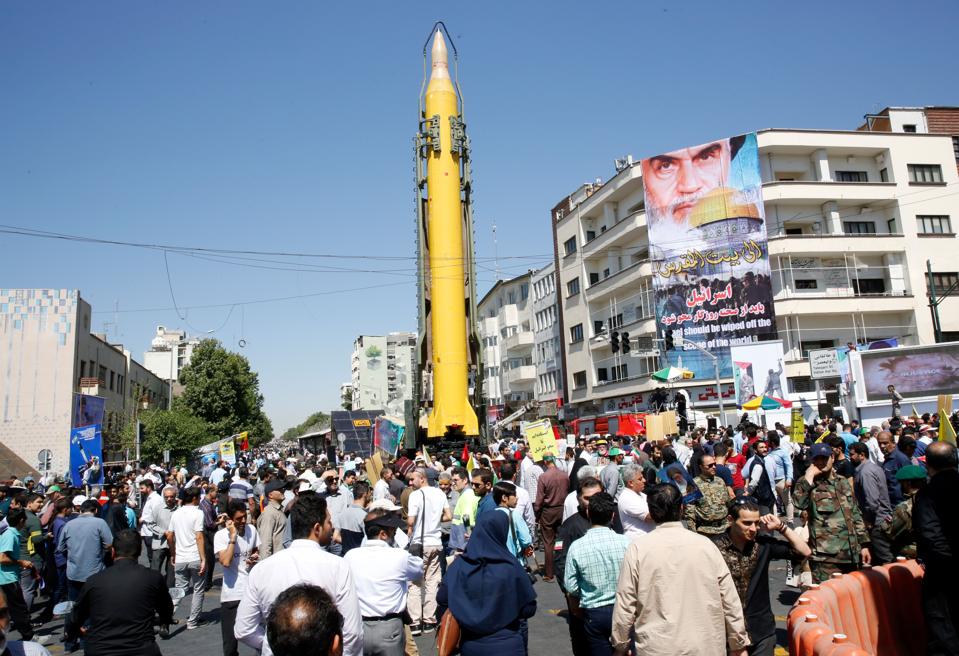
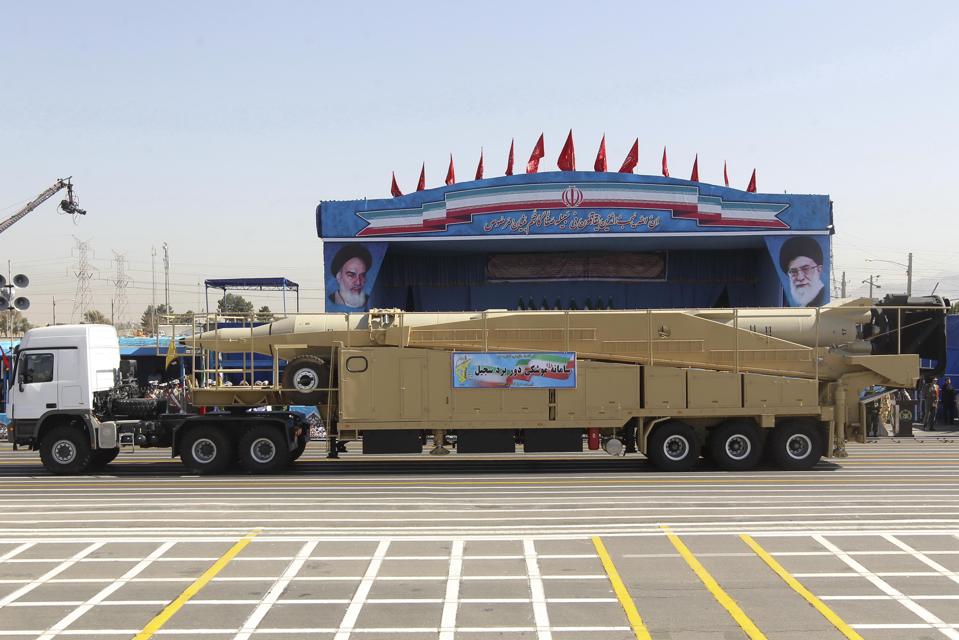
Iran's missile program has accelerated since the signing of the nuclear agreement between Tehran and world powers in 2015, a new report by the National Council of Resistance of Iran revealed.
According to NCRI's findings, which were made public at a press conference held at the council's Washington office on Tuesday, the scope of Iran's missile program is much more extensive than was previously thought.
The report indicates that the Revolutionary Guards, which is in charge of Iran's ballistic missile program, has been carrying out operations at 42 locations, 12 of which were previously unknown. One of the reported missile complexes is tied to SPND, the organization in charge of pursuing the building of nuclear bombs.

Iran Has Accelerated Its Missile Activities


Dr. Majid Rafizadeh, Contributor
President of the International American Council and board member of the US-Middle East Chamber of Business and Commerce and Harvard IR.
In a press conference in Washington DC on Tuesday, June 20, 2017, the US representative office of the National Council of Resistance of Iran revealed that on orders of Ali Khamenei, the Iran’s supreme leader, Tehran has accelerated its missile activities and tests After the Iran Nuclear Deal, known as the Joint Comprehensive Plan of Action of JCPOA.

Iran Opposition Unveils IRGC Missile Sites

, 
Iran has been pursuing an extensive ballistic missile program through dozens of very important sites, including twelve unknown to this day and one specifically linked to its highly sensitive and controversial nuclear program, the Iranian opposition National Council of Resistance of Iran (NCRI) revealed at a press conference Tuesday in Washington.

Iran’s missile program stepped up after nuclear deal Read more

Less than a week after the U.S. Senate adopted sweeping new sanctions targeting Iran’s Revolutionary Guards (IRGC) and two days after Tehran launched a series of missiles at territories inside Syria while claiming to target ISIS, the Iranian opposition National Council of Resistance of Iran (NCRI) held a press conference in Washington on Tuesday, June 20, unveiling new information about dozens of IRGC missile sites.
On the orders of Iranian Supreme Leader Ali Khamenei, the IRGC has accelerated its ballistic missile activities and tests following the Iran nuclear deal, representatives of the NCRI U.S. Office said.
Sources associated with the People's Mojahedin Organization of Iran (PMOI/MEK), the main NCRI coalition member, and inside Iran’s Defense Ministry and IRGC, confirmed Khamenei has specifically tasked the IRGC Aerospace Force to carry out this initiative.

Message to Iran: "Regime Change Is in Reach

It is the hope of the Iranian people that the US will support their message, which can be seen on the banner celebrating the NCRI’s Paris rally “Regime change is in reach
IRAN, 21 June 2017 -- American policy toward Iran turned around last January, with the inauguration of Donald Trump. Trump made his views on Iran clear during his campaign, and they are much different from those of his predecessor. The Obama administration took great pride in the Iran nuclear deal it helped to negotiate, but while still a candidate, Trump repeatedly referred to the agreement as one of the worst deals ever negotiated, and promised to overturn it upon assuming office.

MEK Network Changes the Scene of Iran's Presidential Election

Iran Focus 
London, 19 May - In the final day or so before the so-called presidential “election” in Iran between incumbent President Hassan Rouhani and Ebrahim Raisi, a cleric with close ties to the Supreme Leader, the scene on the ground is far different from the portrait painted by the regime’s state-run media and some western outlets.
The vast network of dissidents supporting the Iranian opposition People's Mojahedin Organization of Iran (PMOI/MEK) has come alive in unprecedented scale to voice the true feelings of the Iranian people about the candidates and the regime in its entirety.
Cities and towns across the country, including major metropolitan centers such as Tehran, Mashhad, Isfahan, Tabriz and Shiraz, have been scenes of brave activists daring many odds and challenges to put up large posters and images of Iranian opposition leader Maryam Rajavi from bridges and overpasses, car windshields and even the walls of buildings belonging to the regime’s security forces, such as the Revolutionary Guards Bassij.

In Discussing Middle East Policy, US Should Acknowledge the Goal of Regime Change

Ivan Sheehan

Ivan Sheehan

The election of Donald Trump last year set the stage for major changes in U.S. foreign policy and particularly American policy toward the Islamic Republic of Iran. It was clear on the campaign trail that Trump’s views on Iran could hardly be more different than those of his predecessor, Barack Obama. Almost six months into his first term the administration is now well positioned to lay the foundation for a lasting Middle East legacy by boldly embracing the goal of regime change in Tehran.
Whereas the Obama administration took great pride in the Iran nuclear deal it helped to negotiate, then GOP candidate Trump repeatedly referred to the agreement as one of the worst deals ever negotiated and promised to overturn it upon assuming office. Although the Trump White House is technically upholding the Joint Comprehensive Plan of Action (JCPOA), it has also imposed tough new sanctions on the regime that are unrelated to the Iranian nuclear program. Iran policies now under development suggest that an explicit endorsement of regime change may well be on the horizon.

By Giulio Terzi
Since the five permanent members of the UN Security Council and Germany concluded their nuclear negotiations with the Islamic Republic of Iran, several Iranian ballistic missile tests have been carried out. It is one of several facts that leaves no doubt about the persistence of defiant attitudes and threats to the international community coming out of the Iranian regime.

THIS TIME THE WEST OUGHT TO BACK IRANIANS WHO SEEK REGIME CHANGE

In Discussing Middle East Policy, US Should Acknowledge the Goal of Regime Change
by Dr. Shahram Taromsari
As the international community watched to see who would be pulled out of the ballot box in Iran’s Presidential election last month, many Iranians refused to participate in the process, seeing no real prospect for change in their country and not wanting to encourage the perception of legitimacy for the existing government.
Despite state media propaganda of a high turnout (which the regime has claimed at each of its sham polls), this time the online social sphere was full of images of empty voting stations and posters on walls calling for a boycott.
The organized boycott was led by the People’s Mojahedin Organization of Iran (PMOI or MEK), the principle opposition group to the Ayatollahs’ regime.
The country’s leading opposition group has continued to attract support throughout the past three decades, even after regime authorities attempted to destroy the group in the midst of a massacre of political prisoners, which killed 30,000 in the summer of 1988. It has also continued to accumulate supporters and organize activist demonstrations in the four years since Rouhani took office on promises of greater civil rights and less restrictions on cultural activities and free expression.

INTERNATIONAL COMMUNITY MUST SUPPORT MEK/PMOI IN THE HEART OF THE IRANIAN RESISTANCE


By INU Staff
INU - There are many around the world who are pondering what the correct diplomatic response to the Iranian Regime should be and even those at those in charge of foreign policy aren’t entirely sure, given Secretary of State, Rex Tillerson’s recent comment that the US’s Iran policy is “under development.”
Tillerson said: “It’s not yet been delivered to the president, but I would tell you that we certainly recognize Iran’s continued destabilizing presence in the region, their payment of foreign fighters, their export of militia forces in Syria, in Iraq, in Yemen, their support for Hezbollah. And we are taking action to respond to Iran’s hegemony. Additional sanctions actions have been put in place against individuals and others.

UK and European Leaders Offer Support as Iranian Opposition Prepares for Grand Gathering in Paris

The National Council of Resistance of Iran (NCRI) will be holding its Grand Gathering in Paris, France, on July 1, 2017, with various conferences being held on the days leading up to the event. Leaders from the international community are sending messages of support as the gathering draws close, including members of the UK and European leadership.

Lord Carlile of Berriew and Lord Clarke of Hamsptead, two prominent members of the British House of Lords, sent messages of support for the upcoming Iranian opposition gathering.

This time the West ought to back Iranians who seek regime change


As the international community watched to see who would be pulled out of the ballot box in Iran’s Presidential election last month, many Iranians refused to participate in the process, seeing no real prospect for change in their country and not wanting to encourage the perception of legitimacy for the existing government.
Despite state media propaganda of a high turnout (which the regime has claimed at each of its sham polls), this time the online social sphere was full of images of empty voting stations and posters on walls calling for a boycott. The organized boycott was led by the People’s Mojahedin Organization of Iran (PMOI or MEK), the principle opposition group to the Ayatollahs’ regime.
The country’s leading opposition group has continued to attract support throughout the past three decades, even after regime authorities attempted to destroy the group in the midst of a massacre of political prisoners, which killed 30,000 in the summer of 1988. It has also continued to accumulate supporters and organize activist demonstrations in the four years since Rouhani took office on promises of greater civil rights and less restrictions on cultural activities and free expression.

UK and European Leaders Offer Support as Iranian Opposition Prepares for Grand Gathering in Paris

The National Council of Resistance of Iran (NCRI) will be holding its Grand Gathering in Paris, France, on July 1, 2017, with various conferences being held on the days leading up to the event. Leaders from the international community are sending messages of support as the gathering draws close, including members of the UK and European leadership.

Lord Carlyle and Lord Clark, two prominent members of the British House of Lords, sent messages of support for the upcoming Iranian opposition gathering.
“This is a very important gathering… and I will join in line and with the aim of establishing a new government in Iran that I hope will be governed by responsible individuals, such as Mrs. Rajavi,” said Lord Carlyle. “For years I have supported your movement and Mrs. Rajavi in your objectives to making Iran a free country. The recent elections in Iran have inflicted major wounds in this regime.”

What Is the Right Policy Towards Iran and the MEK?


By Jubin Katiraie
It is sometimes now that many US officials have been talking about Iran and the actions that US must take towards Iran. In a hearing in the congress, the Secretary of State, Rex Tillerson, in response to a question about the US policy towards Iran said: “Well our Iranian policy is under development. It’s not yet been delivered to the president, but I would tell you that we certainly recognize Iran’s continued destabilizing presence in the region, their payment of foreign fighters, their export of militia forces in Syria, in Iraq, in Yemen, their support for Hezbollah. And we are taking action to respond to Iran’s hegemony. Additional sanctions actions have been put in place against individuals and others.”
“We continually review the merits both from the standpoint of diplomatic but also international consequences of designating the Iranian Revolutionary Guard in its entirety as a terrorist organization,” he added. “As you know, we have designated the Quds [Force]. Our policy towards Iran is to push back on this hegemony, contain their ability to develop obviously nuclear weapons, and to work toward support of those elements inside of Iran that would lead to a peaceful transition of that government. Those elements are there, certainly as we know.”

US Intelligence Predicts Attack From IranTerrorism 28 September 2018 Iran Focus London, 28 Sep - US intelligence suggests that Iranian-backe...